Online Therapy Services Accessible Mental Healthcare

Online therapy services are revolutionizing mental healthcare access, offering convenient and often more affordable alternatives to traditional in-person therapy. This transformative approach utilizes technology to connect individuals with licensed therapists, breaking down geographical barriers and fostering a wider reach for those seeking support for a variety of mental health concerns. From stress and anxiety management to overcoming addiction and fostering personal growth, online therapy provides a flexible and adaptable path towards improved mental well-being.
The diverse range of modalities available, including Cognitive Behavioral Therapy (CBT), Dialectical Behavior Therapy (DBT), and psychodynamic approaches, caters to individual needs and preferences. This comprehensive guide explores the accessibility, effectiveness, and various applications of online therapy, offering insights into its benefits and potential challenges.
Mindfulness Practices in Online Therapy
Mindfulness, the practice of paying attention to the present moment without judgment, is increasingly integrated into online therapy sessions. Its accessibility and adaptability make it a valuable tool for addressing a wide range of mental health concerns, offering a practical approach to managing symptoms and promoting well-being remotely. This section will explore the integration of mindfulness techniques in online therapy, highlighting its benefits and challenges.
Mindfulness techniques are incorporated into online therapy sessions through various methods, tailored to the individual’s needs and the specific therapeutic approach. Therapists might guide clients through guided meditations, body scans, mindful breathing exercises, or even incorporate mindfulness into cognitive behavioral therapy (CBT) techniques. For example, a therapist might use a guided meditation to help a client experiencing anxiety to focus on their breath and bodily sensations, reducing the intensity of anxious thoughts.
In CBT, mindfulness can help clients identify and challenge negative thought patterns more effectively.
Benefits of Mindfulness in Online Therapy for Different Mental Health Conditions
Mindfulness offers significant benefits across various mental health conditions. For anxiety disorders, mindfulness practices can help reduce physiological arousal and interrupt the cycle of anxious thoughts. In depression, mindfulness can foster self-compassion and improve emotional regulation, counteracting negative self-talk and feelings of hopelessness. For individuals struggling with trauma, mindfulness can provide a sense of grounding and control, helping to manage flashbacks and emotional distress.
Even in conditions like insomnia, mindfulness techniques such as progressive muscle relaxation can promote relaxation and improve sleep quality. The ability to access these techniques remotely through online therapy expands access to care and provides ongoing support.
Challenges of Teaching and Practicing Mindfulness Remotely
While highly beneficial, teaching and practicing mindfulness remotely presents unique challenges. The lack of in-person interaction can make it harder to gauge a client’s level of engagement and provide personalized feedback. Technical difficulties, such as poor internet connection or distracting environments, can also disrupt the practice. Furthermore, building rapport and trust remotely requires additional effort and sensitivity.
The therapist needs to be mindful of the client’s digital literacy and ensure the exercises are easily accessible and understood. It’s crucial to adapt instructions to account for varying levels of experience with mindfulness practices.
Sample Online Mindfulness Exercise
This exercise combines guided imagery and deep breathing to promote relaxation and reduce stress. The therapist would guide the client through the following steps:
Step 1: Finding a comfortable position. The client is encouraged to find a quiet space where they can sit or lie down comfortably. The therapist might suggest using a comfortable chair or lying on their bed with support for their back and neck. This sets the stage for physical relaxation.
Step 2: Focusing on the breath. The client is guided to pay attention to their breath, noticing the sensation of the air entering and leaving their nostrils or the rise and fall of their abdomen. The therapist might suggest counting each inhale and exhale to maintain focus. This anchors the client in the present moment.
Step 3: Guided Imagery. The therapist then guides the client through a visualization exercise, such as imagining a peaceful natural setting. They might describe details such as the sights, sounds, and smells of the environment, encouraging the client to engage all their senses. This helps to shift attention away from stressful thoughts and emotions.
Step 4: Body Scan. The therapist guides the client to bring their awareness to different parts of their body, noticing any sensations without judgment. This helps to cultivate body awareness and promote relaxation. This step can be integrated with the guided imagery or practiced separately.
Step 5: Gradual Return. The therapist guides the client to slowly bring their awareness back to the present moment, noticing the sounds and sensations in their surroundings. This prepares them for re-engagement with their day-to-day activities.
Mental Health Advocacy Through Online Platforms
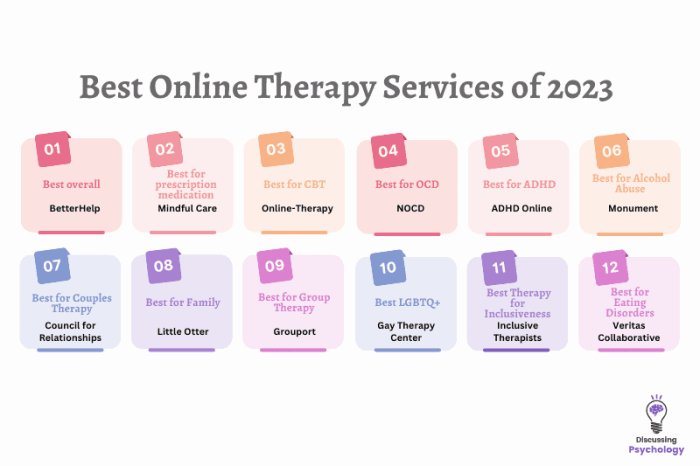
Online therapy platforms have emerged as powerful tools for promoting mental health awareness and challenging the stigma surrounding mental illness. Their accessibility and reach extend beyond geographical limitations, offering a unique opportunity to reshape societal perceptions and improve access to care for a broader population. This increased access is particularly vital for individuals who may face barriers to traditional in-person therapy.Online therapy platforms significantly contribute to mental health advocacy by normalizing conversations about mental wellbeing.
The ease of access provided by these platforms encourages individuals to seek help, fostering a culture of self-care and promoting open dialogue about mental health challenges. This destigmatization is crucial for encouraging early intervention and preventing the progression of mental health conditions.
Access to Mental Health Resources for Marginalized Communities
Online therapy offers unparalleled access to mental health resources and support for marginalized communities who often face systemic barriers to traditional care. Geographic location, financial constraints, transportation difficulties, and cultural or linguistic barriers can significantly limit access to mental health services. Online platforms, however, can overcome these obstacles by providing services remotely, often at a lower cost, and in multiple languages.
This inclusivity is particularly impactful for individuals from rural areas, low-income backgrounds, or belonging to minority groups who may feel more comfortable accessing care in a virtual setting. For example, platforms offering culturally sensitive therapy tailored to specific ethnic or religious groups can address the unique needs of these communities and help bridge the gap in mental health care disparities.
Ethical Considerations in Online Mental Health Advocacy
Providing mental health advocacy through online platforms necessitates careful consideration of ethical implications. Maintaining client confidentiality in a digital environment is paramount. Robust security measures, including data encryption and adherence to privacy regulations (like HIPAA in the US), are essential to protect sensitive information. Another crucial aspect is ensuring the competence and qualifications of therapists providing online services.
Clear guidelines and oversight mechanisms are necessary to maintain professional standards and prevent unqualified individuals from practicing. Furthermore, addressing potential biases in algorithms used by online platforms to recommend therapists or resources is crucial to ensure equitable access for all users. The potential for misrepresentation or misinformation regarding mental health treatments and resources also requires careful monitoring and proactive measures to ensure accuracy and responsible dissemination of information.
Examples of Successful Online Mental Health Advocacy Campaigns
Several successful online campaigns and initiatives demonstrate the power of digital platforms in promoting mental health advocacy. The #YouAreNotAlone campaign, for instance, leveraged social media to connect individuals struggling with mental health issues and foster a sense of community and support. Many mental health organizations have also utilized online platforms to launch awareness campaigns, providing educational resources and promoting self-help strategies.
The use of online forums and support groups allows individuals to connect with others facing similar challenges, fostering peer support and reducing feelings of isolation. Furthermore, the increasing use of telehealth platforms during the COVID-19 pandemic showcased the adaptability and effectiveness of online mental health services, expanding access to care for many who previously lacked it. These examples highlight the potential of online platforms to reach a vast audience, promote understanding, and facilitate access to much-needed support.
Therapy and Counseling Options Available Online
Online therapy offers a diverse range of services, providing accessibility and flexibility for individuals seeking mental health support. The various formats cater to different needs and preferences, impacting both the therapeutic experience and its effectiveness. Understanding these options is crucial for selecting the most appropriate approach for individual circumstances.
Online Therapy Formats: Individual, Group, and Couples Counseling
Online therapy is offered in several formats, each with its own strengths and weaknesses. Individual therapy provides one-on-one sessions with a therapist, allowing for focused attention on personal concerns. Group therapy offers a supportive environment where individuals with shared experiences can connect and learn from each other. Couples therapy provides a space for partners to address relationship challenges and improve communication.
Advantages and Disadvantages of Online Therapy Formats
Individual Online Therapy: Advantages include personalized attention, convenience, and privacy. Disadvantages can be a lack of face-to-face interaction and potential challenges with building rapport. This format is suitable for individuals who prefer a private and focused therapeutic experience, particularly those with specific anxieties or complex issues requiring individualized attention.
Group Online Therapy: Advantages include affordability, shared experiences, and a sense of community. Disadvantages can be less individual attention and potential discomfort sharing personal information in a group setting. This format works well for individuals seeking support and connection from others facing similar challenges, such as those with social anxiety or dealing with grief.
Couples Online Therapy: Advantages include convenience and a comfortable space for intimate discussions. Disadvantages can be challenges with nonverbal communication and the need for both partners to actively participate. This is ideal for couples seeking to improve their relationship dynamics, address conflict, or navigate specific challenges like infertility or infidelity.
Licensing and Credentialing Requirements for Online Therapists
Licensing and credentialing requirements for online therapists vary significantly depending on the region. Generally, therapists must be licensed in the state or country where they are providing services. These licenses often include specific requirements for telehealth practice, such as secure video conferencing platforms and adherence to data privacy regulations like HIPAA in the United States. It’s crucial for clients to verify a therapist’s credentials and licensing before engaging in therapy.
Many professional organizations offer resources to help verify licensing information. For example, the American Psychological Association (APA) provides a directory of licensed psychologists.
Online Therapy Options: A Comparison
| Therapy Type | Format | Advantages | Disadvantages |
|---|---|---|---|
| Individual Therapy | One-on-one video sessions, text-based communication | Personalized attention, flexibility, privacy | May lack nonverbal cues, requires self-discipline |
| Group Therapy | Video conferencing sessions with multiple participants | Cost-effective, peer support, shared experiences | Less individual attention, potential for discomfort |
| Couples Therapy | Joint video sessions with both partners | Convenient for couples, fosters communication | Requires active participation from both partners |
| Family Therapy | Video sessions involving family members | Addresses systemic issues, improves family dynamics | Requires commitment from all family members |
Building Resilience Through Online Therapy
Online therapy offers a unique and accessible avenue for cultivating resilience, the ability to bounce back from adversity. By providing a safe and confidential space, online therapy empowers individuals to confront challenges, develop coping mechanisms, and ultimately strengthen their mental fortitude. The flexibility and convenience of online platforms also contribute significantly to consistent engagement, a crucial factor in building lasting resilience.Online therapy utilizes various evidence-based techniques to foster resilience.
These methods are adapted to suit the individual’s needs and preferences within the virtual setting, making the process both effective and personalized.
Resilience-Building Techniques in Online Therapy
Several techniques are commonly employed to enhance resilience within the context of online therapy. These techniques are designed to help individuals identify their strengths, develop coping strategies, and build a more positive outlook on life’s inevitable challenges.
- Cognitive Behavioral Therapy (CBT): CBT helps individuals identify and challenge negative thought patterns that contribute to feelings of helplessness or hopelessness. Through online exercises and guided sessions, clients learn to reframe negative thoughts into more realistic and empowering perspectives. For example, a client struggling with job loss might be guided to challenge thoughts of complete failure by focusing on their transferable skills and past successes.
- Mindfulness Practices: Mindfulness techniques, such as meditation and deep breathing exercises, are readily integrated into online therapy. These practices help individuals cultivate present moment awareness, reducing stress and anxiety, and promoting emotional regulation. Guided meditation audios and visual aids are frequently used to enhance the experience.
- Stress Management Techniques: Online therapy offers various stress management tools, including progressive muscle relaxation, guided imagery, and journaling prompts delivered through secure platforms. These techniques help clients manage stress responses and build coping skills for stressful situations. For instance, a client experiencing exam anxiety might learn progressive muscle relaxation to calm their physical symptoms before an online exam.
Long-Term Effects of Online Resilience-Building Programs
Studies suggest that participation in online resilience-building programs can lead to significant long-term improvements in mental well-being. These improvements often extend beyond the immediate alleviation of symptoms.Individuals who consistently engage in online resilience-building activities tend to experience reduced levels of stress and anxiety, improved emotional regulation, increased self-esteem, and enhanced coping skills. This translates to greater overall life satisfaction and improved ability to navigate future challenges effectively.
For example, research shows that individuals who participated in a CBT-based online resilience program reported significantly lower rates of depression and anxiety six months after the program’s completion compared to a control group.
Practical Tips for Maintaining Resilience in Daily Life
Maintaining resilience requires ongoing effort and self-care. Online therapy provides a framework for incorporating these practices into daily routines.
- Prioritize Self-Care: Engaging in activities that promote physical and mental well-being, such as regular exercise, healthy eating, sufficient sleep, and hobbies, are crucial for maintaining resilience. Online therapy often incorporates personalized self-care plans, tracking progress and providing support.
- Cultivate Positive Relationships: Strong social connections provide a buffer against stress and adversity. Online therapy can help individuals strengthen existing relationships and build new supportive connections, even through online communities or support groups.
- Practice Gratitude: Regularly acknowledging and appreciating the positive aspects of life can significantly improve overall well-being and resilience. Online journaling prompts and guided exercises can encourage the development of a gratitude practice.
- Set Realistic Goals: Setting achievable goals and celebrating small victories helps build self-efficacy and fosters a sense of accomplishment, bolstering resilience in the face of setbacks. Online goal-setting tools and progress tracking features can facilitate this process.
Workplace Mental Health Support via Online Therapy
The modern workplace presents significant challenges to mental wellbeing. Long hours, demanding deadlines, and the ever-present connectivity fostered by technology contribute to widespread stress, anxiety, and burnout. Online therapy offers a powerful and increasingly accessible solution to address these issues, providing confidential and convenient support to employees struggling with their mental health. Its integration into employee wellness initiatives is rapidly becoming a key component of a supportive and productive work environment.Online therapy offers confidential and accessible mental health support to employees by removing many of the barriers traditionally associated with seeking professional help.
The anonymity offered by online platforms can reduce the stigma often associated with mental health issues, encouraging employees to seek help proactively. Furthermore, the flexibility of scheduling appointments and accessing therapy from anywhere with an internet connection eliminates geographical limitations and logistical hurdles. This accessibility is particularly beneficial for employees in remote locations or those with busy schedules.
The convenience of online therapy makes it easier to integrate mental health support into their lives without disrupting their work-life balance.
Confidential and Accessible Support Mechanisms
Online therapy platforms utilize secure communication channels, ensuring the confidentiality of employee sessions. This is crucial in fostering trust and encouraging open communication between employees and therapists. Many platforms employ encryption and other security measures to protect sensitive information, ensuring compliance with relevant privacy regulations. The accessibility of online therapy is further enhanced by the availability of various communication methods, including video conferencing, text messaging, and email, allowing employees to choose the mode of communication that best suits their needs and preferences.
This variety of options caters to different communication styles and preferences, making mental health support more inclusive and approachable.
Benefits of Integrating Online Therapy into Employee Wellness Initiatives
Integrating online therapy into employee wellness programs yields numerous benefits for both employees and employers. For employees, it provides readily available, confidential support for managing stress, anxiety, and burnout, ultimately leading to improved mental wellbeing and increased job satisfaction. For employers, a robust mental health program can translate to reduced absenteeism, increased productivity, and a more engaged and positive workforce.
A healthier workforce is also a more productive and innovative one, making the investment in mental health support a strategic business decision. Furthermore, offering online therapy demonstrates a commitment to employee wellbeing, strengthening employer-employee relationships and fostering a culture of care and support.
Examples of Successful Workplace Mental Health Programs
Several organizations have successfully integrated online therapy into their employee wellness programs. For instance, some large tech companies offer their employees access to online therapy platforms as part of their comprehensive benefits packages. These programs often include resources like educational materials on mental health, stress management techniques, and access to mental health professionals through online platforms. Similarly, many companies in the healthcare sector are increasingly adopting online therapy as a way to support the mental health of their frontline workers, who often face significant emotional and psychological challenges.
These programs have demonstrated positive impacts on employee morale, job satisfaction, and overall productivity, showcasing the effectiveness of integrating online therapy into workplace wellness initiatives. The success of these programs underlines the growing recognition of the importance of workplace mental health and the role of online therapy in addressing these critical needs.
Overcoming Addictions with Online Therapy Support

Online therapy offers a convenient and accessible pathway to addiction treatment and recovery, breaking down geographical barriers and reducing the stigma often associated with seeking help. The anonymity and flexibility afforded by online platforms can be particularly beneficial for individuals struggling with addiction, allowing them to engage in therapy from the comfort and privacy of their own homes. This approach leverages technology to deliver evidence-based interventions, ultimately improving treatment outcomes and fostering long-term recovery.The accessibility and convenience of online therapy are significant advantages in addiction treatment.
Individuals in remote areas, those with mobility limitations, or those facing scheduling conflicts can easily access professional help. The asynchronous nature of some online platforms also allows clients to engage with therapeutic materials at their own pace, accommodating busy schedules and promoting self-management skills. This increased accessibility potentially leads to higher treatment completion rates and improved overall outcomes.
Different Online Approaches to Addiction Treatment, Online therapy services
Online addiction treatment utilizes various therapeutic approaches tailored to individual needs and preferences. Cognitive Behavioral Therapy (CBT) is a widely used method that helps individuals identify and modify negative thought patterns and behaviors contributing to addiction. CBT techniques used online might include guided journaling exercises, interactive modules focusing on cognitive restructuring, and virtual reality exposure therapy for specific triggers.
Motivational Interviewing (MI), another effective approach, focuses on enhancing intrinsic motivation for change by exploring the client’s ambivalence towards recovery. Online MI might involve video sessions where therapists use empathetic listening and reflective questioning to support the client’s self-discovery and commitment to change. These different approaches are often combined to create a holistic treatment plan.
Challenges and Ethical Considerations of Providing Online Addiction Therapy
Providing online addiction therapy presents unique challenges and ethical considerations. Maintaining client confidentiality and data security is paramount. Robust security measures, including encryption and secure data storage, are essential to protect sensitive information. Verifying a client’s identity and ensuring their safety are also crucial, especially when dealing with individuals who may be experiencing severe withdrawal symptoms or mental health crises.
Therapists must be adequately trained in telehealth practices and possess the skills to assess and manage potential risks associated with online therapy, such as the client’s access to resources and support systems. Clear protocols for handling emergencies and ethical dilemmas are also necessary. Furthermore, the lack of in-person contact can make it challenging to accurately assess a client’s emotional state and potentially miss subtle cues that might be apparent in a face-to-face setting.
Careful consideration of these factors is vital to ensure ethical and effective online addiction treatment.
A Typical Online Addiction Treatment Program
A typical online addiction treatment program might include an initial assessment to determine the individual’s specific needs and treatment goals. This might involve questionnaires, video conferencing, and review of relevant medical history. Following the assessment, a personalized treatment plan is developed, outlining the specific therapeutic approaches to be used, the frequency of sessions, and the goals for each stage of treatment.
The program might incorporate various modalities, including individual therapy sessions via video conferencing, participation in online support groups, access to educational materials and resources, and regular progress monitoring. The program’s duration varies depending on the individual’s needs and progress. Ongoing communication between the therapist and client is vital to ensure treatment effectiveness and address any challenges that may arise.
Regular check-ins, progress reviews, and adjustments to the treatment plan are integral components of a successful online addiction treatment program. The program would also include relapse prevention planning, equipping the individual with strategies to manage cravings and high-risk situations.
Personal Growth and Self-Care in Online Therapy: Online Therapy Services
Online therapy offers a unique opportunity for personal growth and self-care, providing a convenient and accessible platform for individuals to explore their inner selves and develop coping mechanisms for everyday challenges. The anonymity and comfort of one’s own space can foster a deeper level of self-reflection and vulnerability, leading to significant personal breakthroughs.Online therapy facilitates personal growth and self-discovery by providing a structured environment for self-exploration.
Through guided exercises, journaling prompts, and therapeutic discussions, individuals can identify limiting beliefs, understand their emotional patterns, and develop healthier coping strategies. The consistent interaction with a therapist, even remotely, provides accountability and support, crucial for maintaining momentum in the personal growth journey.
Self-Care Strategies in Online Therapy
Many self-care strategies are effectively taught and practiced within the context of online therapy sessions. These strategies are tailored to the individual’s needs and preferences, ensuring a personalized approach to well-being. The therapist acts as a guide, helping the client to identify areas needing improvement and develop practical, actionable steps.
Examples of Online Tools and Resources
Several online tools and resources complement online therapy sessions, enhancing personal growth and self-care efforts. These resources often include guided meditation apps (like Calm or Headspace), journaling prompts and templates readily available online, and self-help books accessible through e-readers or online libraries. Furthermore, many therapists utilize secure platforms with built-in resources, such as mood trackers or goal-setting tools.
These tools provide additional support and structure outside of therapy sessions, encouraging consistent self-reflection and self-care practices.
Infographic: Key Self-Care Practices
The infographic is a vibrant, circular design. The central image is a calm, serene landscape – perhaps a peaceful forest or a quiet beach. Radiating outwards from the center are six distinct sections, each representing a key self-care practice.* Section 1: Mindfulness: This section features an image of a person meditating, accompanied by the text “Mindfulness: Practice present moment awareness to reduce stress and anxiety.”
Section 2
Physical Activity: This section displays an icon of a person running or engaging in some form of exercise, with the text “Physical Activity: Engage in regular exercise to boost mood and energy.”
Section 3
Healthy Diet: This section shows colorful fruits and vegetables, along with the text “Healthy Diet: Nourish your body with nutritious foods for optimal physical and mental health.”
Section 4
Sufficient Sleep: This section features an image of a person sleeping soundly, with the text “Sufficient Sleep: Aim for 7-9 hours of quality sleep each night to improve cognitive function and mood.”
Section 5
Social Connection: This section depicts people interacting positively, with the text “Social Connection: Maintain healthy relationships and connect with loved ones regularly.”
Section 6
Setting Boundaries: This section shows a person confidently saying “no,” with the text “Setting Boundaries: Learn to prioritize your well-being by setting healthy boundaries.”Each section is brightly colored and uses clear, concise language. The overall design is visually appealing and easy to understand, effectively summarizing key self-care practices. The circular format emphasizes the interconnectedness of these practices, highlighting that holistic self-care involves attention to multiple aspects of well-being.
In conclusion, online therapy services represent a significant advancement in mental healthcare delivery, offering accessibility, affordability, and diverse treatment options to a broader population. While challenges remain, the ongoing development and refinement of online platforms, coupled with the increasing recognition of its effectiveness, position online therapy as a vital component of a comprehensive mental health care system. By understanding the various approaches, benefits, and potential limitations, individuals can make informed decisions about accessing this increasingly valuable resource for their mental well-being.
FAQ Overview
Is online therapy as effective as in-person therapy?
Studies show online therapy can be just as effective as in-person therapy for many conditions, particularly when the therapist and client have a strong therapeutic alliance.
How do I choose an online therapist?
Look for licensed therapists with experience treating your specific concerns. Check reviews and ensure their platform offers secure communication and a comfortable environment.
Is online therapy confidential?
Reputable online therapy platforms utilize robust security measures to protect client confidentiality. However, it’s crucial to clarify the platform’s privacy policy before starting therapy.
What if I don’t have a good internet connection?
A stable internet connection is essential for online therapy. Discuss alternative options with your therapist if connectivity is a consistent concern.
How much does online therapy cost?
Costs vary depending on the therapist, platform, and insurance coverage. Many platforms offer sliding scale fees or payment plans.