How to Practice Mindfulness Daily

How to practice mindfulness daily is a question many ask, seeking a path to greater peace and well-being. This exploration delves into the core principles of mindfulness, differentiating it from meditation and offering practical strategies for integrating this powerful technique into your everyday life. We’ll examine how mindfulness can alleviate stress and anxiety, support mental health, and even improve sleep quality and workplace productivity.
Discover various mindfulness practices, from mindful breathing to mindful movement, and learn how to build resilience and foster personal growth through consistent mindful engagement.
From creating a mindful morning routine to navigating challenges and misconceptions, this guide provides a comprehensive roadmap for cultivating a daily mindfulness practice. We’ll cover practical tips, guided meditations, and resources to support your journey towards a more mindful and fulfilling life. Whether you’re a complete beginner or seeking to deepen your existing practice, this guide offers valuable insights and tools to help you integrate mindfulness into your daily life successfully.
Mindfulness and Stress/Anxiety Management
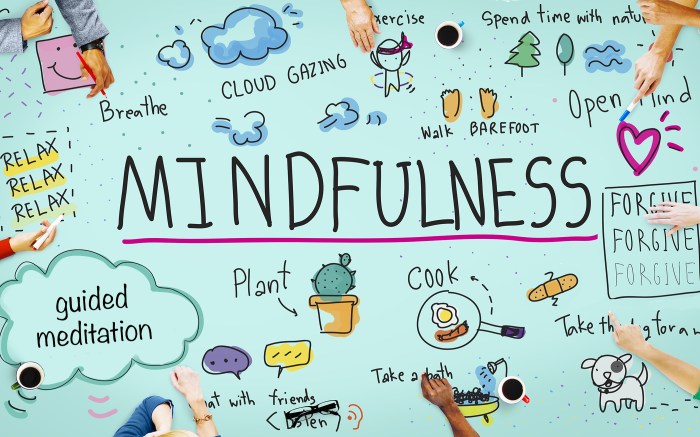
Mindfulness, the practice of paying attention to the present moment without judgment, offers a powerful approach to managing stress and anxiety. By cultivating awareness of our thoughts, feelings, and bodily sensations, we can detach from overwhelming emotions and cultivate a sense of calm. This allows us to respond to stressful situations more effectively rather than reacting impulsively.Mindfulness reduces stress and anxiety by shifting our focus from anxious thoughts about the future or regrets about the past to the present.
This interruption of the cycle of negative thinking allows our nervous system to regulate itself, reducing the physiological responses associated with stress, such as increased heart rate and muscle tension. Furthermore, regular mindfulness practice strengthens our capacity for self-compassion, enabling us to handle difficult emotions with greater ease and resilience.
Mindfulness Exercises for Stress Management in High-Pressure Situations
Several mindfulness exercises can be particularly helpful in navigating high-pressure situations. These techniques aim to ground us in the present moment, calming the nervous system and promoting a sense of control.
- Body Scan Meditation: This involves systematically bringing awareness to different parts of the body, noticing sensations without judgment. By focusing on physical sensations, we shift attention away from racing thoughts and anxious feelings.
- Mindful Breathing: Paying close attention to the breath – the rise and fall of the chest or abdomen – anchors us to the present. Even a few minutes of focused breathing can significantly reduce feelings of stress.
- Sensory Awareness: Engaging the senses – noticing sounds, smells, tastes, sights, and textures – helps to ground us in the present moment. This can be particularly effective during moments of heightened anxiety.
Comparison of Mindfulness with Other Stress Management Methods
Mindfulness complements other stress management techniques rather than replacing them. While exercise releases endorphins and reduces tension physically, mindfulness addresses the mental and emotional aspects of stress. Similarly, deep breathing exercises, while sharing some overlap with mindfulness, may not always address the underlying cognitive processes that contribute to stress and anxiety. Mindfulness, therefore, provides a unique approach by fostering self-awareness and emotional regulation skills.
A holistic approach to stress management often incorporates a combination of techniques, including mindfulness, exercise, and deep breathing, tailored to individual needs and preferences.
Guided Meditation Script for Stress Reduction
Find a comfortable position, either sitting or lying down. Close your eyes gently. Bring your attention to your breath, noticing the natural rhythm of your inhales and exhales. Don’t try to change your breath; simply observe it. Notice the sensation of the air entering your nostrils, filling your lungs, and then gently leaving your body.
Now, bring your awareness to your body. Notice any sensations – tension, warmth, coolness – without judgment. Simply acknowledge them. If your mind wanders, gently guide your attention back to your breath.
Imagine a calming image – perhaps a peaceful scene in nature. Let this image fill your mind, replacing any anxious thoughts. Continue to focus on your breath and your calming image.
As you continue to breathe, allow yourself to relax deeper and deeper. Feel the tension melting away from your body. Let go of any worries or concerns. You are safe. You are present. You are calm.
Take a few more deep breaths, and when you’re ready, gently open your eyes.
Mindfulness and Depression Support: How To Practice Mindfulness Daily
Mindfulness practices offer a valuable tool in managing depressive symptoms. By cultivating present moment awareness, individuals can begin to detach from negative thought patterns and cultivate a greater sense of self-compassion. This approach isn’t a replacement for professional help, but rather a complementary strategy that can significantly enhance overall well-being.Mindfulness helps to interrupt the cycle of rumination and negative self-talk, common features of depression.
By focusing on the present, rather than dwelling on past regrets or future anxieties, individuals can experience a reduction in the intensity and frequency of depressive symptoms. The practice also promotes emotional regulation, allowing individuals to observe their emotions without judgment, leading to a more balanced emotional state.
Misconceptions About Mindfulness for Depression
It’s crucial to address common misunderstandings surrounding mindfulness and depression. Some believe mindfulness requires emptying the mind completely, which is unrealistic and can be counterproductive. Others might feel that if mindfulness doesn’t instantly alleviate all symptoms, it’s ineffective. In reality, mindfulness is a skill that develops over time, requiring consistent practice and patience. It’s also important to remember that mindfulness is not a cure-all, and it should be used in conjunction with other evidence-based treatments, such as therapy and medication, when necessary.
Furthermore, some individuals may experience a temporary increase in negative emotions initially as they become more aware of their internal experiences; this is a normal part of the process and should not be interpreted as a sign of failure.
Available Resources and Support Networks, How to practice mindfulness daily
Numerous resources and support networks exist for individuals struggling with depression. These include professional mental health services such as therapy (cognitive behavioral therapy (CBT) and other approaches are often effective), psychiatric care for medication management, and support groups. Online resources such as the National Institute of Mental Health (NIMH) website and the Depression and Bipolar Support Alliance (DBSA) offer valuable information, support forums, and connections to local resources.
Many apps also offer guided mindfulness meditations and other tools for managing depression. Remember to seek professional guidance to determine the most appropriate course of action for your individual needs.
Helpful Self-Care Practices Complementing Mindfulness
Engaging in consistent self-care practices alongside mindfulness can significantly enhance depression management. These practices support overall well-being and create a supportive environment for the mindfulness practice to flourish.
A holistic approach to self-care is essential. This includes:
- Prioritizing regular physical activity, even if it’s just a short walk each day. Exercise releases endorphins, which have mood-boosting effects.
- Maintaining a balanced and nutritious diet. Nourishing your body with healthy foods provides the energy and nutrients needed to cope with depression.
- Ensuring adequate sleep. Aim for 7-9 hours of quality sleep per night to allow the body and mind to rest and repair.
- Engaging in enjoyable activities, such as hobbies or spending time with loved ones. These activities provide a sense of pleasure and connection.
- Practicing relaxation techniques, such as deep breathing exercises or progressive muscle relaxation, to reduce stress and anxiety.
- Setting realistic goals and breaking down tasks into smaller, manageable steps to avoid feeling overwhelmed.
- Seeking social support from friends, family, or support groups. Connecting with others can provide a sense of belonging and reduce feelings of isolation.
Building Resilience through Mindfulness
Mindfulness, the practice of paying attention to the present moment without judgment, is a powerful tool for cultivating resilience. Resilience, the ability to bounce back from adversity, is crucial for navigating life’s inevitable challenges. By fostering a deeper understanding of our thoughts, feelings, and sensations, mindfulness helps us to respond to difficult situations with greater equanimity and adaptability.Mindfulness fosters resilience by equipping us with the skills to manage stressful situations more effectively.
Instead of reacting impulsively, we learn to pause, observe our internal experience, and choose our responses consciously. This conscious awareness allows us to detach from overwhelming emotions, reducing the impact of stress and promoting a sense of calm amidst turmoil.
Mindfulness Techniques for Managing Difficult Emotions and Challenging Situations
Mindfulness practices, such as meditation and mindful breathing, can significantly impact our ability to navigate challenging situations. When faced with adversity, a mindful approach encourages us to acknowledge our emotions without judgment, rather than trying to suppress or ignore them. For example, if experiencing anxiety before a presentation, instead of letting the anxiety escalate, a mindful approach might involve focusing on the sensation of breath, observing the physical manifestations of anxiety (e.g., rapid heartbeat, shallow breathing), and acknowledging these sensations without judgment.
This allows for a more balanced perspective and a more measured response, reducing the likelihood of a panic attack or performance impairment. Another example could involve noticing the thoughts associated with a difficult conversation and choosing how to respond instead of reacting automatically. This conscious choice reduces the likelihood of impulsive or regretful actions.
Mindfulness and the Development of Self-Compassion and Acceptance
A core element of building resilience is self-compassion – treating oneself with kindness and understanding, particularly during times of struggle. Mindfulness cultivates self-compassion by helping us to observe our inner critic without identifying with its judgments. We learn to recognize that our thoughts and feelings are not facts, but simply passing experiences. This detachment allows for greater self-acceptance and reduces the self-criticism that can hinder our ability to cope with challenges.
For instance, after a setback, a mindful approach encourages self-compassion by acknowledging the pain and disappointment without harshly judging oneself. Instead of dwelling on self-blame, the focus shifts to self-soothing and understanding that setbacks are a normal part of life.
Comparison of Mindfulness and Other Coping Mechanisms
The following table compares the impact of mindfulness on resilience with other common coping mechanisms.
| Coping Mechanism | Short-Term Effects | Long-Term Effects | Resilience Impact |
|---|---|---|---|
| Mindfulness | Reduced stress and anxiety, increased self-awareness | Improved emotional regulation, increased self-compassion, enhanced coping skills | High: Promotes sustained ability to adapt and recover from adversity |
| Avoidance | Temporary relief from distress | Increased avoidance behaviors, avoidance of opportunities for growth, unresolved underlying issues | Low: Avoidance prevents learning and adaptation to challenges |
| Substance Use | Temporary escape from emotions | Physical and psychological dependence, increased risk of mental health issues, impaired coping skills | Very Low: Damages coping mechanisms and exacerbates underlying issues |
| Emotional Suppression | Temporary reduction in outward expression of emotions | Increased internal stress, potential for psychosomatic illnesses, difficulty forming healthy relationships | Low: Emotions are not processed, hindering personal growth and resilience |
Mindfulness and Sleep
Mindfulness, the practice of paying attention to the present moment without judgment, has a profound impact on sleep quality. By cultivating awareness of our thoughts, feelings, and bodily sensations, we can reduce the mental chatter and racing thoughts that often interfere with restful sleep. This allows for a more natural transition into a relaxed state, conducive to sleep.Mindfulness cultivates a calmer, more regulated nervous system, which is essential for healthy sleep cycles.
The ability to observe thoughts and emotions without getting swept away by them allows for emotional regulation, reducing the impact of stress and anxiety on sleep.
The Relationship Between Mindfulness and Sleep Quality
Mindfulness practices directly address the physiological and psychological factors that disrupt sleep. A calm mind, achieved through regular mindfulness exercises, reduces the production of stress hormones like cortisol, which can interfere with the sleep-wake cycle. Furthermore, mindfulness helps to improve awareness of bodily sensations, enabling individuals to better recognize and respond to physical cues that indicate tiredness or the need for rest.
Studies have shown a correlation between regular mindfulness practice and improved sleep latency (time to fall asleep), sleep efficiency (percentage of time spent asleep while in bed), and overall sleep quality.
Practical Tips for Using Mindfulness to Improve Sleep Hygiene
Establishing a consistent sleep schedule is crucial for regulating the body’s natural sleep-wake cycle. Creating a relaxing bedtime routine that incorporates mindfulness techniques can significantly improve sleep quality. This routine might include a warm bath, gentle stretching, or a short mindfulness meditation session.
- Create a Relaxing Bedtime Routine: Incorporate calming activities such as reading, listening to soothing music, or taking a warm bath at least an hour before bed.
- Practice Mindful Breathing: Focus on the sensation of your breath entering and leaving your body. This simple technique can help calm your nervous system and quiet racing thoughts.
- Body Scan Meditation: Bring awareness to different parts of your body, noticing any sensations without judgment. This can help release physical tension that may be contributing to sleeplessness.
- Limit Screen Time Before Bed: The blue light emitted from electronic devices can interfere with melatonin production, a hormone crucial for regulating sleep.
- Create a Conducive Sleep Environment: Ensure your bedroom is dark, quiet, and cool. A comfortable mattress and pillows are also important.
A Guided Meditation Script for Promoting Relaxation and Sleep
Lie down comfortably in bed. Close your eyes gently. Bring your attention to your breath, noticing the natural rhythm of your inhales and exhales. Feel the rise and fall of your chest or abdomen. As you breathe in, imagine you are inhaling calmness and peace. As you breathe out, imagine you are releasing any tension or stress you may be holding onto. Now, begin to scan your body, starting with your toes. Notice any sensations, any tension. Don’t try to change anything, simply observe. Move your awareness up your body, through your legs, your abdomen, your chest, your arms, your neck, and finally your head. With each breath, let go of any tension you find. Continue to focus on your breath, letting your thoughts drift by like clouds in the sky. You don’t need to chase them or judge them. Simply observe and let them go. Allow yourself to sink deeper into relaxation. Repeat silently to yourself: “I am safe. I am calm. I am at peace.” Continue this for as long as you need. When you’re ready, gently open your eyes.
The Impact of Stress and Anxiety on Sleep and How Mindfulness Can Help
Stress and anxiety are major contributors to sleep disturbances. When we are stressed, our bodies release stress hormones that can keep us awake and alert. Anxiety often manifests as racing thoughts, worries, and fears, making it difficult to quiet the mind and fall asleep. Mindfulness provides a powerful tool to manage stress and anxiety, thus improving sleep.
By cultivating present moment awareness, we can detach from our worries and anxieties, reducing their grip on our minds. Regular mindfulness practice strengthens our ability to regulate our emotions and responses to stressful situations, leading to improved sleep quality over time. This includes techniques such as mindful breathing, body scan meditations, and mindful movement, all of which promote relaxation and reduce physiological arousal.
Mindfulness in the Workplace
Integrating mindfulness into the daily work routine can significantly benefit both individual employees and the overall work environment. By cultivating a mindful approach, individuals can navigate workplace pressures more effectively, leading to improved productivity, reduced stress, and a more positive work atmosphere. This section explores practical strategies and techniques for incorporating mindfulness into the workplace.Mindfulness techniques enhance focus and attention by training the mind to stay present and engaged.
This counters the tendency to get distracted by thoughts, emails, or other interruptions. The result is increased concentration and efficiency in completing tasks.
Mindfulness Exercises for the Workplace
Practicing mindfulness doesn’t require extensive time or a dedicated space. Even short, regular mindfulness exercises can have a profound impact on stress levels and concentration. The following are easily adaptable to a busy work environment.
- Mindful Breathing: Take a few moments throughout the day to focus on your breath. Notice the sensation of the air entering and leaving your body. If your mind wanders, gently redirect your attention back to your breath. This can be done at your desk, during a break, or even in a meeting (discreetly).
- Body Scan Meditation: Bring awareness to different parts of your body, noticing any sensations without judgment. Start with your toes and gradually move upwards, paying attention to any tension or relaxation. Even a shortened version focusing on the shoulders, neck, and head can alleviate physical stress accumulated from prolonged sitting.
- Mindful Walking: During your lunch break or short commute, pay close attention to the physical sensations of walking. Notice the feeling of your feet on the ground, the movement of your legs, and the rhythm of your breath. This simple practice can help ground you and clear your mind.
Enhancing Focus and Attention Through Mindfulness
Mindfulness cultivates a heightened awareness of the present moment, reducing the impact of distracting thoughts and external stimuli. By regularly practicing mindfulness, individuals can improve their ability to concentrate on tasks, leading to increased efficiency and productivity. This heightened focus also enhances the quality of work produced, as greater attention to detail becomes more natural. For example, a mindful approach to reviewing a document might uncover errors overlooked during a rushed review.
Mindfulness and Positive Work Environment
A mindful approach can foster a more supportive and collaborative work environment. When employees are less stressed and more focused, they tend to be more patient, empathetic, and understanding towards colleagues. This contributes to a more positive and harmonious team dynamic. Mindfulness practices can also promote effective communication by encouraging active listening and reducing reactive responses to conflict.
This leads to more constructive problem-solving and stronger relationships among team members. For example, a team practicing mindfulness might find it easier to navigate disagreements constructively, leading to innovative solutions.
Embarking on a journey of daily mindfulness is a commitment to self-care and personal growth. By understanding the core principles, integrating practical techniques into your daily routine, and addressing common challenges, you can unlock the transformative power of mindfulness. Remember that consistency is key; even short periods of mindful practice can accumulate significant benefits over time. This journey is about cultivating awareness, compassion, and a deeper connection with yourself and the world around you.
Embrace the process, be patient with yourself, and enjoy the journey towards a more mindful and fulfilling life.
General Inquiries
What if I find it difficult to focus during mindfulness practice?
It’s perfectly normal to find your mind wandering. Gently redirect your attention back to your chosen focus (breath, body sensations, etc.) without judgment. The key is to practice non-judgmental observation.
How long should I practice mindfulness each day?
Even 5-10 minutes a day can be beneficial. Start small and gradually increase the duration as your comfort level grows.
Is mindfulness a replacement for therapy?
No, mindfulness is a complementary practice that can enhance the effectiveness of therapy but should not replace professional mental health treatment when needed.
Can I practice mindfulness anywhere?
Yes! Mindfulness can be practiced virtually anywhere – at your desk, during your commute, while eating, or even while walking.