Dialectical Behavior Therapy (DBT) A Comprehensive Guide
Dialectical behavior therapy (DBT) offers a powerful approach to managing intense emotions and improving interpersonal relationships. Developed by Marsha Linehan, DBT integrates elements of cognitive behavioral therapy (CBT) with mindfulness practices, creating a holistic therapeutic framework. This approach proves particularly effective for individuals struggling with borderline personality disorder, but its applications extend to a wide range of emotional and behavioral challenges, including depression, anxiety, and substance abuse.
The core principles of DBT emphasize the dialectic – the acceptance of current reality while simultaneously striving for change. This approach acknowledges the validity of an individual’s feelings while encouraging the development of healthier coping mechanisms and behavioral patterns. Throughout this guide, we will explore the various components of DBT, from its foundational principles and techniques to its applications in diverse contexts, offering a comprehensive understanding of this impactful therapeutic modality.
Introduction to Dialectical Behavior Therapy (DBT)
Dialectical Behavior Therapy (DBT) is a type of cognitive behavioral therapy (CBT) specifically designed to treat individuals with borderline personality disorder (BPD) and other emotional dysregulation issues. It emphasizes the importance of accepting oneself while simultaneously striving for change, a concept known as dialectical thinking. This approach addresses a range of difficulties, including intense emotions, impulsive behaviors, and troubled relationships.
Core Principles of DBT
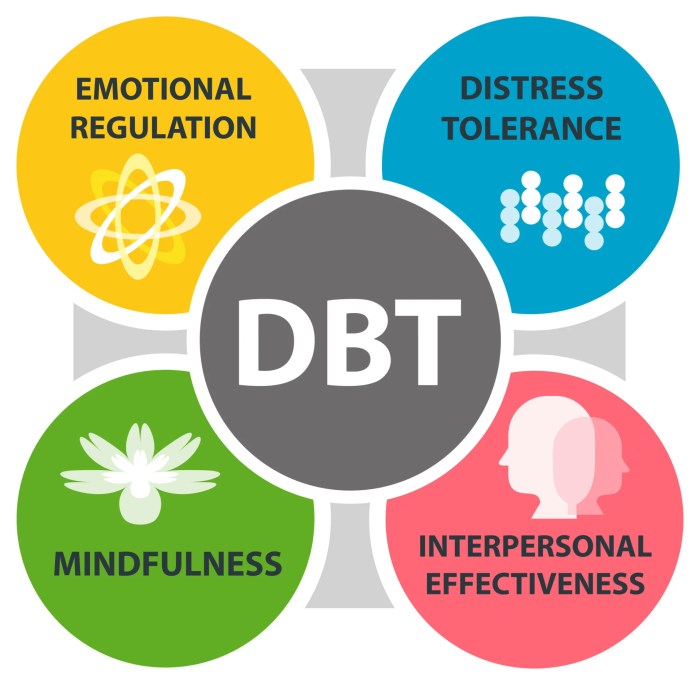
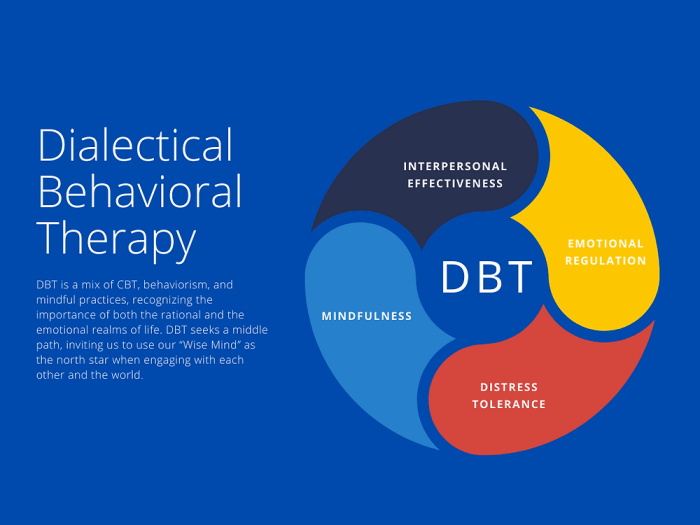
DBT’s core principles revolve around the integration of acceptance and change. It acknowledges that individuals struggling with emotional dysregulation often experience intense and overwhelming feelings. Rather than simply suppressing these emotions, DBT teaches skills to manage and tolerate them effectively. Simultaneously, it encourages clients to actively work towards changing maladaptive behaviors and thoughts. Key principles include mindfulness, distress tolerance, emotion regulation, and interpersonal effectiveness.
These skills provide clients with practical tools to navigate challenging situations and improve their overall well-being.
History and Development of DBT
Developed by Marsha Linehan, a psychologist, in the late 1980s, DBT emerged from a need for a more effective treatment for individuals with BPD. Early treatments often focused solely on changing behaviors, neglecting the intense emotional experiences contributing to these behaviors. Linehan’s work combined elements of CBT with mindfulness practices, recognizing the importance of both acceptance and change in managing BPD symptoms.
The therapy’s development involved rigorous research and refinement, leading to its widespread acceptance and effectiveness as a treatment modality. Its success is based on a combination of individual therapy, group skills training, and phone coaching.
Comparison of DBT with Other Therapeutic Approaches
While DBT shares similarities with other CBT approaches, it distinguishes itself through its specific focus on emotional regulation and acceptance. Unlike traditional CBT, which might primarily focus on cognitive restructuring, DBT incorporates mindfulness techniques to increase awareness of emotions and develop skills for managing them. Compared to psychodynamic therapies, which explore deep-seated unconscious conflicts, DBT is more action-oriented, emphasizing the development of concrete skills for managing immediate challenges.
Furthermore, unlike some other therapies that might focus solely on individual sessions, DBT often includes group therapy and phone coaching to provide ongoing support and reinforcement of learned skills.
Key Components of DBT
The following table summarizes the four key modules of DBT skills training:
| Module | Skills Focus | Description | Example Application |
|---|---|---|---|
| Mindfulness | Observing, describing, participating, non-judgmentally | Developing awareness of present moment experiences without judgment. | Noticing physical sensations, thoughts, and emotions without getting carried away by them. |
| Distress Tolerance | Crisis survival skills, self-soothing, distractions | Coping with overwhelming emotions and situations without resorting to harmful behaviors. | Using self-soothing techniques like taking a warm bath during a panic attack. |
| Emotion Regulation | Identifying, understanding, and managing emotions | Developing strategies for understanding and regulating emotional responses. | Identifying triggers for anger and developing coping mechanisms, like deep breathing. |
| Interpersonal Effectiveness | Assertiveness, communication, setting boundaries | Improving communication and relationship skills. | Asserting personal needs respectfully in a difficult conversation. |
DBT Techniques and Skills
Dialectical Behavior Therapy (DBT) is a comprehensive treatment approach that equips individuals with a range of skills to manage intense emotions, improve relationships, and cope with distress. The effectiveness of DBT stems from its structured approach, which combines individual therapy with skills training groups. These skills are organized into four modules, providing a framework for personal growth and improved well-being.
The Four Modules of DBT Skills Training
DBT skills training is typically delivered in groups and focuses on four key areas: mindfulness, distress tolerance, emotion regulation, and interpersonal effectiveness. Each module builds upon the others, creating a holistic approach to managing challenging emotions and behaviors. Mastering these skills allows individuals to navigate difficult situations more effectively and develop a stronger sense of self.
Mindfulness Techniques in DBT
Mindfulness, a core component of DBT, involves paying attention to the present moment without judgment. This practice helps individuals become more aware of their thoughts, feelings, and sensations, fostering a sense of self-awareness and acceptance. Common mindfulness techniques employed in DBT include:
- Mindful breathing: Focusing on the sensation of breath entering and leaving the body.
- Body scan meditation: Systematically bringing awareness to different parts of the body, noticing sensations without judgment.
- Observing thoughts and emotions: Recognizing thoughts and emotions as passing events rather than fixed realities.
Regular practice of these techniques cultivates a non-judgmental awareness, which is crucial for managing intense emotions and reducing reactivity.
Distress Tolerance Strategies
Distress tolerance skills are designed to help individuals cope with overwhelming emotions and situations without resorting to harmful behaviors. These skills teach individuals how to survive crises and tolerate intense emotions until they can approach the situation more effectively. Examples include:
- Radical acceptance: Accepting the reality of a situation, even if it’s unpleasant or unwanted.
- Self-soothing: Engaging in activities that comfort and soothe the senses, such as listening to calming music or taking a warm bath.
- Improving the moment: Focusing on small, manageable actions to make the current situation more tolerable.
- Distraction techniques: Engaging in activities that shift attention away from distressing thoughts and feelings, such as engaging in a hobby or spending time with loved ones.
These strategies provide immediate relief and create a sense of calm during overwhelming moments.
A Step-by-Step Guide for Practicing Emotion Regulation
Emotion regulation skills help individuals understand, identify, and manage their emotions effectively. This process involves several steps:
- Identify the emotion: Name the emotion you’re experiencing. Be specific (e.g., “I’m feeling frustrated and overwhelmed,” instead of just “I’m angry”).
- Understand the emotion’s function: What is the emotion telling you? What needs are not being met? What is the emotion trying to communicate?
- Reduce emotional intensity: Employ mindfulness techniques or distress tolerance strategies to reduce the intensity of the emotion.
- Change the emotion (if needed): If the emotion is unhelpful or maladaptive, actively try to change it through problem-solving, perspective-taking, or other coping mechanisms.
- Build skills to manage future emotions: Develop a plan for managing similar emotions in the future.
Consistent practice of these steps strengthens emotional resilience and reduces emotional reactivity.
Interpersonal Effectiveness Skills
Interpersonal effectiveness skills are designed to improve communication and relationship dynamics. These skills empower individuals to assert their needs and boundaries while maintaining healthy relationships. Examples include:
- DEAR MAN: A structured approach to assertive communication (Describe, Express, Assert, Reinforce, Maintain, Appear confident, Negotiate).
- GIVE: Guidelines for maintaining positive relationships (Gentle, Interested, Validate, Easy manner).
- FAST: Strategies for effective communication (Fair, Apologize, Stick to values, Truthful).
These skills provide a framework for navigating interpersonal challenges with greater confidence and effectiveness. The acronym DEAR MAN provides a practical framework for expressing needs assertively, while GIVE and FAST promote healthy communication and relationship maintenance.
DBT and Stress and Anxiety Management
Dialectical Behavior Therapy (DBT) offers a comprehensive approach to managing stress and anxiety by equipping individuals with practical skills to cope with overwhelming emotions and challenging situations. It moves beyond simply identifying triggers and instead focuses on developing a flexible and adaptable skillset for navigating distress. This approach emphasizes both acceptance of difficult emotions and the active pursuit of change, creating a balanced strategy for long-term well-being.DBT helps manage stress and anxiety by teaching individuals a range of skills that directly address the emotional and behavioral components of these conditions.
It tackles the problem from multiple angles, fostering emotional regulation, improving interpersonal effectiveness, and building mindfulness practices. By integrating these skills into daily life, individuals gain greater control over their emotional responses and develop healthier coping mechanisms.
DBT Exercises for Anxiety Reduction
Several DBT exercises effectively reduce anxiety. These exercises target different aspects of anxiety, from physiological symptoms to underlying thought patterns. Consistent practice is key to mastering these techniques and integrating them into daily life for sustained benefit.
- Mindful Breathing: This involves focusing on the sensation of breath entering and leaving the body, noticing the rise and fall of the chest or abdomen. This simple exercise anchors the individual in the present moment, reducing the tendency to dwell on anxious thoughts about the future or regrets about the past. A common variation involves counting each inhale and exhale.
- Progressive Muscle Relaxation: This technique involves systematically tensing and releasing different muscle groups in the body. By focusing on the physical sensations of tension and release, individuals learn to recognize and manage physical manifestations of anxiety such as muscle tension and trembling. Starting with the toes and working up to the head, this methodical approach promotes a state of deep relaxation.
- Self-Soothing Techniques: These techniques involve engaging the five senses to create a calming and comforting experience. This might include listening to soothing music, taking a warm bath, enjoying a favorite scent, savoring a delicious food, or wrapping oneself in a soft blanket. The goal is to interrupt the cycle of anxious thoughts and feelings by providing a counterpoint of sensory pleasure.
Applying DBT Skills to Stressful Situations
Applying DBT skills to stressful situations requires conscious effort and practice. The goal is to use the skills learned in therapy to manage reactions in real-time, preventing escalation and promoting emotional regulation.
- Distress Tolerance Skills: When faced with an overwhelming situation, distress tolerance skills provide coping mechanisms to manage intense emotions without resorting to harmful behaviors. These skills include techniques like self-soothing, distraction, and accepting reality. For example, during a stressful work presentation, one might utilize self-soothing by focusing on their breath or using a grounding technique to anchor themselves in the present moment.
- Emotion Regulation Skills: These skills help identify, understand, and manage emotions. This involves identifying the emotion, understanding its function, and then choosing a healthy response rather than reacting impulsively. For instance, if someone feels overwhelmed by criticism, they might use emotion regulation skills to identify the emotion (hurt and anger), understand its source (fear of failure), and choose a response such as calmly asking for clarification rather than becoming defensive.
- Mindfulness in Action: Mindfulness is not just a passive activity; it’s a dynamic skill to be applied actively during stressful situations. This involves paying attention to the present moment without judgment, acknowledging thoughts and feelings without getting carried away by them. For example, during a conflict, practicing mindfulness can help an individual observe their own emotional response and that of the other person without immediately reacting.
The Role of Mindfulness in Anxiety Management
Mindfulness, a core component of DBT, plays a crucial role in anxiety management. It teaches individuals to observe their thoughts and feelings without judgment, creating a space between the experience and the reaction. This mindful awareness helps to reduce the intensity of emotional responses and break the cycle of anxious rumination. By cultivating present moment awareness, individuals learn to accept difficult emotions without being overwhelmed by them, fostering a sense of calm and control.
Mindfulness practices, such as meditation and body scan meditations, can significantly reduce anxiety symptoms over time.
DBT and Depression Support
Dialectical Behavior Therapy (DBT) offers a powerful approach to managing and overcoming depression. Unlike some therapies that focus solely on cognitive restructuring, DBT integrates mindfulness, distress tolerance, emotion regulation, and interpersonal effectiveness skills to address the multifaceted nature of depressive experiences. This holistic approach helps individuals not only to understand and change negative thought patterns but also to develop healthier coping mechanisms and build a stronger sense of self.DBT addresses negative thought patterns contributing to depression by challenging and reframing unhelpful thinking styles.
Cognitive behavioral therapy (CBT) principles are integrated into DBT, allowing individuals to identify and challenge automatic negative thoughts (ANTs) – those rapid, often unconscious, negative interpretations of events. However, DBT goes beyond simply identifying and challenging these thoughts; it equips individuals with the skills to manage the emotional distress that often fuels these negative thought patterns. Through mindfulness practices, individuals learn to observe their thoughts without judgment, reducing their power over mood and behavior.
The emphasis on acceptance, a core tenet of DBT, allows individuals to acknowledge their negative thoughts without being overwhelmed by them.
DBT Skills in Depression Treatment
DBT utilizes several key skills to combat depression. Mindfulness techniques, such as observing thoughts and feelings without judgment, help individuals gain distance from their negative thoughts and emotions. Distress tolerance skills provide coping strategies for managing intense emotional states without resorting to self-harm or other maladaptive behaviors. Emotion regulation skills help individuals identify, understand, and manage their emotions effectively.
Finally, interpersonal effectiveness skills improve communication and relationship skills, which can significantly impact an individual’s overall well-being and reduce feelings of isolation often associated with depression. These skills are taught and practiced both individually and in group settings, allowing for a supportive and collaborative learning environment.
Case Studies Illustrating DBT’s Effectiveness for Depression
The following case studies illustrate the positive impact of DBT on individuals struggling with depression:
- A 28-year-old woman experiencing chronic depression and suicidal ideation participated in a year-long DBT program. Through mindfulness exercises and distress tolerance techniques, she learned to manage her intense emotions and reduce self-harming behaviors. She also developed more effective communication skills, leading to improved relationships and a greater sense of support. Following the program, her depressive symptoms significantly reduced, and her suicidal ideation ceased.
- A 45-year-old man with a history of major depressive disorder and substance abuse engaged in individual and group DBT. He learned to identify and challenge his negative thought patterns and developed healthier coping mechanisms for managing stress and difficult emotions. His substance use decreased significantly, and he reported a marked improvement in his mood and overall functioning.
- A teenager struggling with depression and anxiety following a traumatic event benefited from DBT’s focus on emotion regulation. By learning to identify and label their emotions, they gained a sense of control and were better able to cope with overwhelming feelings. This improved their ability to engage in positive activities and improved their overall mood.
These examples highlight the versatility of DBT in addressing diverse presentations of depression. It’s important to note that individual results may vary.
DBT and the Promotion of Self-Compassion in Depression
DBT actively fosters self-compassion, a crucial element in recovery from depression. Traditional approaches to therapy sometimes emphasize self-criticism as a motivator for change. However, DBT recognizes that self-criticism can exacerbate depression. Instead, DBT encourages individuals to treat themselves with the same kindness and understanding they would offer a close friend struggling with similar challenges. Mindfulness practices help individuals to observe their thoughts and feelings without judgment, creating space for self-acceptance.
Distress tolerance skills provide a means of coping with difficult emotions without resorting to self-blame or harsh self-criticism. By cultivating self-compassion, individuals can build resilience, improve their self-esteem, and create a more supportive internal environment for healing. This shift in perspective from self-criticism to self-compassion is a key factor in long-term recovery from depression.
DBT and Building Resilience: Dialectical Behavior Therapy (DBT)
Dialectical Behavior Therapy (DBT) is not just about managing symptoms; it’s about cultivating inner strength and the ability to bounce back from life’s inevitable challenges. By focusing on mindfulness, distress tolerance, emotion regulation, and interpersonal effectiveness, DBT equips individuals with a comprehensive toolkit for building resilience against stress and adversity. This resilience isn’t simply about avoiding hardship, but about developing the capacity to navigate difficult situations with greater ease and less emotional distress.DBT fosters resilience by enhancing coping mechanisms and promoting a sense of self-efficacy.
It moves beyond simply reacting to stressful events and empowers individuals to proactively address challenges and build a stronger foundation for future well-being. The core principles of DBT directly contribute to this increased resilience, enabling individuals to better manage their responses to stress and adversity.
Strategies for Enhancing Coping Mechanisms
DBT provides a range of practical strategies to improve coping skills. These techniques are not abstract concepts but are actively practiced and refined through therapy. This active engagement is crucial for internalizing these skills and making them readily available during times of stress. The focus is on developing a personalized toolkit tailored to the individual’s unique needs and challenges.
- Mindfulness: Practicing mindfulness helps individuals become more aware of their thoughts, feelings, and bodily sensations without judgment. This awareness allows for a more balanced response to stressful situations, reducing impulsive reactions and promoting a sense of calm.
- Distress Tolerance: This skill set focuses on techniques to cope with intense emotions and difficult situations without resorting to harmful behaviors. Techniques such as radical acceptance, self-soothing, and distraction help individuals manage overwhelming emotions in a healthy way.
- Emotion Regulation: DBT helps individuals identify, understand, and manage their emotions effectively. This includes learning to identify emotional triggers, developing healthy coping strategies, and reducing emotional reactivity.
- Interpersonal Effectiveness: Improving communication skills and assertiveness enables individuals to navigate interpersonal conflicts more effectively, reducing stress and improving relationships. This helps build supportive networks that can act as a buffer against adversity.
The Role of Self-Acceptance in Building Resilience, Dialectical behavior therapy (DBT)
Self-acceptance is a cornerstone of resilience within the DBT framework. It’s not about ignoring flaws or pretending everything is perfect; rather, it’s about accepting oneself unconditionally, including strengths and weaknesses. This self-compassionate approach helps individuals approach challenges with greater self-assurance and less self-criticism. Embracing imperfections allows for greater self-understanding and fosters a more positive self-image, which is crucial for navigating setbacks.
“Self-acceptance doesn’t mean you like everything about yourself; it means accepting yourself completely, flaws and all.”
Developing a Sense of Agency and Control
DBT empowers individuals to regain a sense of agency and control over their lives. By learning to manage their emotions and behaviors, individuals become less reactive and more proactive in addressing challenges. This increased sense of control is fundamental to building resilience. It shifts the focus from feeling victimized by circumstances to actively shaping one’s life and response to adversity.
This feeling of empowerment significantly reduces feelings of helplessness and hopelessness, two significant barriers to resilience.
DBT and Sleep and Mental Health
Sleep and mental health are deeply intertwined, a fact readily acknowledged within the Dialectical Behavior Therapy (DBT) framework. Poor sleep significantly impacts emotional regulation, cognitive function, and the ability to effectively utilize DBT skills. Conversely, addressing sleep difficulties can lead to substantial improvements in overall mental well-being and enhance the effectiveness of DBT treatment. This section explores this relationship and provides practical strategies for improving sleep hygiene within a DBT context.The cyclical relationship between sleep and mental health is a key consideration in DBT.
Individuals struggling with conditions like depression, anxiety, or PTSD often experience sleep disturbances, which, in turn, exacerbate their symptoms. Sleep deprivation impairs emotional regulation, leading to increased irritability, impulsivity, and difficulty managing distress. This makes it challenging to effectively utilize DBT skills such as mindfulness, distress tolerance, and emotion regulation. Conversely, improving sleep quality can create a positive feedback loop, leading to improved mood, reduced stress, and enhanced ability to cope with difficult emotions and situations.
The Impact of Sleep Deprivation on DBT Skills Application
Sleep deprivation significantly compromises the effectiveness of DBT skills. When sleep-deprived, individuals experience diminished cognitive function, including impaired attention, concentration, and problem-solving abilities. This directly impacts the ability to engage in mindful awareness, a cornerstone of DBT. The capacity for effective distress tolerance is also reduced; individuals are more likely to resort to maladaptive coping mechanisms when sleep-deprived because their capacity for self-soothing and rational problem-solving is weakened.
Similarly, emotion regulation becomes more challenging, increasing the risk of impulsive behaviors and emotional outbursts. For example, someone struggling with anger might find it exceptionally difficult to utilize DBT’s emotion regulation skills when sleep-deprived, potentially leading to an angry outburst that they would normally be able to manage effectively with sufficient rest.
Improving Sleep Hygiene Using DBT Techniques
Implementing effective sleep hygiene involves integrating various DBT principles. Mindfulness practices, such as focusing on the sensation of the breath or body scan meditation, can help calm the mind and promote relaxation before sleep. Distress tolerance skills, such as self-soothing techniques (e.g., taking a warm bath, listening to calming music), can help manage racing thoughts or anxiety that interfere with sleep.
A consistent sleep schedule, even on weekends, helps regulate the body’s natural sleep-wake cycle. Creating a relaxing bedtime routine, free from screens and stressful activities, further enhances sleep quality. This routine might include reading a book, gentle stretching, or journaling. Finally, maintaining a healthy diet and regular exercise can contribute to better sleep. For example, avoiding caffeine and alcohol before bed, and engaging in regular physical activity during the day, can significantly impact sleep quality.
Managing Insomnia Using Mindfulness Techniques from DBT
Mindfulness techniques are particularly useful in managing insomnia. Mindful breathing exercises can help regulate the nervous system and promote relaxation. Focusing on the sensations of the breath, without judgment, can shift attention away from anxious thoughts or worries that prevent sleep. Body scan meditation involves systematically bringing awareness to different parts of the body, noticing any sensations without trying to change them.
This practice can help reduce physical tension that contributes to insomnia. Furthermore, practicing mindfulness during the day can improve overall stress management, reducing the likelihood of insomnia. For instance, consistently practicing mindfulness throughout the day can help someone develop a greater sense of calm and reduce their overall stress levels, leading to better sleep at night. This cultivates a more relaxed state of being, making it easier to fall asleep and stay asleep.
DBT and Workplace Mental Health
The modern workplace presents significant challenges to mental well-being, with factors like high pressure, demanding deadlines, and interpersonal conflicts contributing to stress, anxiety, and burnout. Dialectical Behavior Therapy (DBT), with its emphasis on mindfulness, emotional regulation, and distress tolerance, offers a powerful framework for enhancing mental health and resilience within the professional context. By equipping employees with DBT skills, organizations can foster a healthier, more productive, and supportive work environment.
Applying DBT Techniques to Workplace Stress Management
DBT’s core principles directly address common workplace stressors. Mindfulness techniques, such as focusing on the present moment rather than dwelling on past mistakes or worrying about future uncertainties, can significantly reduce anxiety related to performance reviews, project deadlines, or interpersonal conflicts. Distress tolerance skills, including techniques like self-soothing and radical acceptance, help employees cope with overwhelming situations without resorting to unhealthy coping mechanisms.
For instance, instead of reacting impulsively to a critical email, an employee might practice mindful breathing to calm down before responding thoughtfully. Similarly, accepting the reality of a challenging project, rather than fighting against it, can lessen feelings of helplessness and increase the sense of control.
Improving Communication and Conflict Resolution Using DBT Skills
Effective communication is crucial in the workplace, and DBT offers valuable tools to enhance this skill. The emphasis on interpersonal effectiveness in DBT helps employees express their needs clearly and assertively while maintaining respect for others. Skills like active listening, perspective-taking, and negotiating compromises are particularly relevant in conflict resolution. For example, during a team meeting, an employee trained in DBT might use active listening to fully understand a colleague’s concerns before responding, fostering mutual understanding and de-escalating potential conflict.
The emphasis on validating others’ perspectives, even if disagreeing with them, can build stronger working relationships and a more collaborative environment.
Organizational Support for Employee Well-being Through DBT-Informed Practices
Organizations can proactively promote employee well-being by incorporating DBT-informed practices. This might include offering DBT workshops or training programs to equip employees with the necessary skills. Furthermore, creating a workplace culture that values mental health and encourages open communication about challenges is essential. Managers can be trained to recognize signs of stress and burnout in their team members and provide support or refer them to appropriate resources.
Implementing flexible work arrangements, providing access to employee assistance programs, and promoting a healthy work-life balance are all supportive measures that complement DBT skill-building. A company might, for example, offer mindfulness meditation sessions during lunch breaks or provide access to online resources on stress management and emotional regulation, all grounded in DBT principles. Such initiatives create a supportive environment where employees feel comfortable seeking help and prioritizing their mental health.
Dialectical Behavior Therapy (DBT) provides a robust and versatile toolkit for navigating life’s challenges. By fostering self-awareness, emotional regulation, and interpersonal effectiveness, DBT empowers individuals to build resilience, manage distress, and cultivate healthier relationships. While the journey of personal growth may be complex, DBT provides a structured path toward greater self-understanding and a more fulfilling life. Its multifaceted approach, combining cognitive techniques with mindfulness practices, offers a unique and effective avenue for personal transformation and lasting well-being.
General Inquiries
Is DBT right for everyone?
While DBT is effective for many, it may not be suitable for all. Individual needs and preferences should be considered when selecting a therapeutic approach.
How long does DBT therapy typically last?
The duration of DBT varies depending on individual needs and goals. Treatment can range from several months to a year or more.
What are the potential side effects of DBT?
Some individuals may experience temporary emotional distress as they confront difficult emotions and behaviors during therapy. However, this is usually a normal part of the therapeutic process.
Can DBT be combined with other therapies?
Yes, DBT can often be effectively integrated with other therapeutic approaches, such as medication management or other forms of psychotherapy.