Coping with Workplace Anxiety A Practical Guide
Coping with workplace anxiety is a crucial skill in today’s demanding professional landscape. Stress, pressure, and challenging work environments can significantly impact mental well-being, leading to decreased productivity and overall dissatisfaction. This guide explores the multifaceted nature of workplace anxiety, providing practical strategies, resources, and support to navigate these challenges effectively. We will delve into understanding the root causes of workplace anxiety, exploring its physiological and psychological manifestations.
Furthermore, we will examine effective coping mechanisms, including relaxation techniques and mindfulness practices, to help individuals build resilience and manage stress levels proactively.
From exploring the benefits of mindfulness and the importance of seeking professional help when needed, to fostering a supportive work environment and promoting self-care, this comprehensive guide offers a holistic approach to managing workplace anxiety. We will also address the relationship between sleep, addiction, and mental health, highlighting the interconnectedness of these factors in overall well-being. Ultimately, the goal is to empower individuals to prioritize their mental health and thrive in their professional lives.
Therapy and Counseling Options for Workplace Anxiety: Coping With Workplace Anxiety
Workplace anxiety, if left unaddressed, can significantly impact both your professional and personal life. Fortunately, various therapeutic approaches can help you manage and overcome these challenges. Understanding the different options available and finding the right fit for your needs is crucial for effective treatment.
Types of Therapy for Workplace Anxiety
Several therapeutic approaches prove effective in managing workplace anxiety. These include Cognitive Behavioral Therapy (CBT), Acceptance and Commitment Therapy (ACT), mindfulness-based therapies, and psychodynamic therapy. Each approach offers a unique perspective and set of techniques to address the underlying causes and symptoms of anxiety. The most suitable therapy will depend on individual preferences, the severity of the anxiety, and the specific triggers involved.
Cognitive Behavioral Therapy (CBT) and Other Approaches Compared, Coping with workplace anxiety
Cognitive Behavioral Therapy (CBT) is a widely used and evidence-based approach that focuses on identifying and changing negative thought patterns and behaviors contributing to anxiety. It involves techniques like cognitive restructuring (challenging negative thoughts) and behavioral experiments (gradually exposing oneself to anxiety-provoking situations). In contrast, Acceptance and Commitment Therapy (ACT) emphasizes accepting difficult emotions and focusing on values-driven actions, rather than trying to eliminate anxiety entirely.
Mindfulness-based therapies, such as Mindfulness-Based Stress Reduction (MBSR), teach techniques to cultivate present moment awareness and reduce reactivity to stressful thoughts and feelings. Psychodynamic therapy explores unconscious patterns and past experiences that may contribute to current anxiety. The choice between these approaches often depends on individual needs and preferences, with some individuals finding benefit from a combination of approaches.
Finding a Qualified Therapist or Counselor
Finding a qualified therapist or counselor is a crucial step in managing workplace anxiety. Several resources can assist in this process. Your primary care physician can provide referrals to mental health professionals in your area. Online directories, such as those maintained by professional organizations like the American Psychological Association (APA) or the National Association of Social Workers (NASW), allow you to search for therapists specializing in anxiety disorders and workplace stress.
Insurance providers often maintain lists of in-network therapists, and it’s advisable to check your coverage before scheduling an appointment. It’s important to read reviews and consider factors like the therapist’s experience, specialization, and approach before making a choice. A brief phone consultation with potential therapists can also help determine if there’s a good fit.
Preparing for a Therapy Session
Preparing for your first therapy session can help maximize its effectiveness. Before your appointment, consider jotting down your primary concerns and anxieties related to your workplace. Think about specific situations or triggers that evoke strong anxious responses. If you’ve tried any self-help strategies, such as relaxation techniques or journaling, note down their effectiveness. Being prepared to discuss your work environment, including your role, responsibilities, and relationships with colleagues, can help your therapist understand the context of your anxiety.
Finally, remember that the therapeutic relationship is built on trust and open communication. Be honest and forthcoming about your experiences and feelings, even if they seem uncomfortable or embarrassing. This open communication is crucial for your therapist to understand your needs and develop an effective treatment plan.
Building Resilience Against Workplace Stressors
Workplace resilience is the ability to bounce back from adversity, stress, and challenges. It’s not about avoiding stress entirely, but rather about developing the skills and mindset to navigate difficult situations effectively and maintain well-being. Building resilience is an ongoing process that requires proactive effort and self-awareness.Factors Contributing to Workplace ResilienceSeveral key factors contribute to an individual’s resilience in the workplace.
These factors often interact and reinforce each other, creating a stronger foundation for coping with stress. Understanding these factors is crucial for developing targeted strategies for improvement.
Factors that Enhance Workplace Resilience
- Strong Social Support Network: Having supportive colleagues, friends, and family members who offer emotional support and practical assistance can significantly buffer the impact of workplace stressors. This network provides a sense of belonging and reduces feelings of isolation.
- Positive Mindset and Self-Efficacy: Believing in your abilities and maintaining a positive outlook, even in challenging times, is a cornerstone of resilience. Individuals with high self-efficacy are more likely to persevere through difficulties and see setbacks as opportunities for growth.
- Effective Problem-Solving Skills: The ability to identify problems, analyze situations, and develop effective solutions is crucial for managing workplace stress. This involves breaking down complex issues into smaller, manageable steps and actively seeking solutions.
- Adaptability and Flexibility: The ability to adjust to changing circumstances and unexpected events is essential in today’s dynamic work environments. Resilient individuals are flexible and able to adapt their strategies and approaches as needed.
- Physical and Mental Well-being: Maintaining a healthy lifestyle through regular exercise, sufficient sleep, and a balanced diet is vital for building resilience. Prioritizing mental well-being through mindfulness practices or therapy can also enhance coping mechanisms.
Strategies for Developing Coping Skills and Resilience
Developing coping skills and resilience is an active process that involves learning new behaviors and strengthening existing ones. These strategies are not a one-size-fits-all solution, and individuals may need to experiment to find what works best for them.
Developing Effective Coping Mechanisms
- Mindfulness and Meditation: Practicing mindfulness involves paying attention to the present moment without judgment. Regular meditation can help reduce stress, improve focus, and enhance emotional regulation.
- Stress Management Techniques: Learning and practicing stress management techniques, such as deep breathing exercises, progressive muscle relaxation, or yoga, can help individuals manage their physical and emotional responses to stress.
- Time Management Skills: Effective time management is crucial for reducing feelings of overwhelm and improving productivity. Prioritizing tasks, setting realistic goals, and breaking down large projects into smaller, manageable steps can significantly reduce stress.
- Setting Boundaries: Learning to set healthy boundaries at work is essential for protecting your time, energy, and mental health. This involves saying “no” to requests that are beyond your capacity or that compromise your well-being.
- Seeking Support: Don’t hesitate to seek support from colleagues, friends, family, or mental health professionals when needed. Talking about your challenges can help you process your emotions and develop effective coping strategies.
Step-by-Step Plan for Building Personal Resilience
Building resilience is a journey, not a destination. A structured approach can be helpful in making consistent progress.
A Structured Approach to Building Resilience
- Self-Assessment: Identify your current strengths and weaknesses in coping with stress. Reflect on past experiences and identify patterns in your responses to challenging situations.
- Goal Setting: Set realistic and achievable goals for improving your resilience. Focus on specific areas where you want to make progress, such as improving time management or developing mindfulness practices.
- Skill Development: Actively learn and practice new coping skills, such as stress management techniques, time management strategies, or communication skills. Seek out resources and support to help you develop these skills.
- Self-Care: Prioritize self-care activities that support your physical and mental well-being. This includes getting enough sleep, eating a healthy diet, exercising regularly, and engaging in activities that you enjoy.
- Regular Review and Adjustment: Regularly review your progress and make adjustments to your plan as needed. Be flexible and willing to adapt your strategies as you learn more about yourself and your responses to stress.
The Role of Self-Compassion in Building Resilience
Self-compassion involves treating yourself with kindness, understanding, and acceptance, especially during difficult times. It’s about acknowledging your imperfections and recognizing that everyone experiences setbacks. Self-compassion helps to reduce self-criticism and promotes emotional healing, which are essential components of resilience.
Self-compassion is not self-indulgence; it’s about recognizing your shared humanity and treating yourself with the same kindness you would offer a friend in need.
Personal Growth and Self-Care Strategies
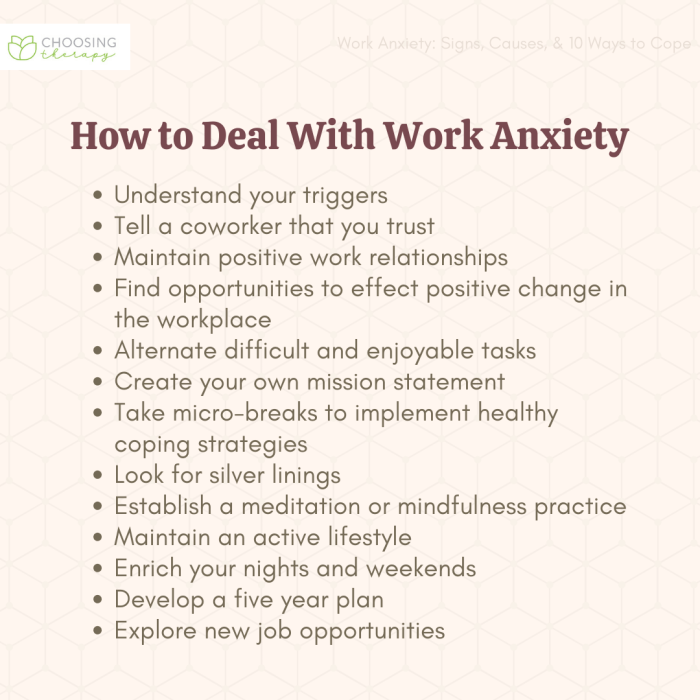
Workplace anxiety significantly impacts our overall well-being, affecting not only our professional lives but also our personal lives. Prioritizing self-care is not a luxury but a necessity for effectively managing stress and anxiety and maintaining a healthy work-life balance. A proactive approach to self-care empowers individuals to build resilience and navigate workplace challenges more effectively.Self-care involves engaging in activities that promote physical, mental, and emotional well-being.
It’s about actively nurturing oneself, replenishing energy, and preventing burnout. Consistent self-care practices significantly reduce the impact of workplace stressors, fostering a sense of calm and control even amidst demanding circumstances. The cumulative effect of neglecting self-care can lead to increased anxiety, decreased productivity, and potential health problems.
Examples of Self-Care Activities
Prioritizing self-care requires identifying activities that resonate with individual needs and preferences. The key is to find activities that are enjoyable, relaxing, and help to recharge. Regular engagement in these activities contributes to a healthier mental state and improved ability to cope with stress.
- Mindfulness and Meditation: Practicing mindfulness, even for a few minutes daily, can help center the mind and reduce feelings of overwhelm. Guided meditation apps or simply focusing on the present moment through deep breathing exercises can be beneficial.
- Physical Exercise: Regular physical activity releases endorphins, which have mood-boosting effects. This could involve anything from a brisk walk to a more intense workout, depending on individual fitness levels and preferences. The aim is to find an activity that is enjoyable and sustainable.
- Healthy Diet and Sleep: Nourishing the body with a balanced diet and ensuring sufficient sleep are fundamental to maintaining mental well-being. Adequate sleep allows the body and mind to rest and repair, while a healthy diet provides the necessary nutrients for optimal brain function.
- Social Connection: Connecting with supportive friends, family, or colleagues can provide emotional support and reduce feelings of isolation. Spending quality time with loved ones can offer a much-needed respite from workplace pressures.
- Hobbies and Interests: Engaging in hobbies and activities that bring joy and fulfillment can help reduce stress and improve overall mood. These activities provide a healthy distraction from work and allow for personal expression and creativity.
Creating a Personalized Self-Care Plan
Developing a personalized self-care plan involves identifying specific activities that are both enjoyable and effective in reducing stress. Consistency is key, so it’s important to incorporate these activities into a daily or weekly routine. The plan should be realistic and adaptable to accommodate changing needs and circumstances.
A successful self-care plan is flexible and tailored to individual preferences and needs. It’s not a rigid set of rules but rather a guide to prioritize well-being.
For example, a personalized plan might include a 15-minute meditation session each morning, a 30-minute walk during lunch breaks, and a relaxing bath before bed three times a week. Regular review and adjustments to the plan are crucial to ensure it remains effective and relevant.
Setting Boundaries to Protect Mental Health
Establishing clear boundaries between work and personal life is crucial for protecting mental health. This involves setting limits on work hours, responding to emails and calls outside of designated work hours, and saying “no” to additional tasks when feeling overwhelmed. Setting boundaries is not selfish; it’s a necessary act of self-preservation that prevents burnout and promotes a healthier work-life balance.For example, a person might decide to switch off their work phone after 6 pm, to not check emails on weekends, or to delegate tasks when their workload becomes unmanageable.
These boundaries, once established, help to create a sense of control and prevent work from encroaching on personal time and well-being. Communicating these boundaries clearly with colleagues and supervisors is essential for their effective implementation.
Successfully navigating workplace anxiety requires a multifaceted approach encompassing self-awareness, stress management techniques, and a proactive commitment to mental well-being. By understanding the origins of workplace anxiety, implementing practical coping strategies, and seeking support when necessary, individuals can significantly reduce stress, enhance productivity, and foster a healthier work-life balance. Remember, prioritizing mental health is not a sign of weakness but rather a testament to self-care and a commitment to overall well-being.
This guide serves as a starting point on your journey to a more balanced and fulfilling professional experience.
Essential Questionnaire
Can workplace anxiety be prevented?
While completely preventing workplace anxiety is difficult, proactive steps like maintaining a healthy work-life balance, practicing stress-reduction techniques, and establishing clear boundaries can significantly minimize its impact.
What if my employer isn’t supportive of my mental health needs?
If your employer is unsupportive, consider seeking advice from HR, employee assistance programs (EAPs), or external mental health professionals. You may also have legal rights regarding workplace accommodations for mental health conditions.
How do I know if I need professional help?
If anxiety significantly impacts your daily life, work performance, or relationships, and self-help strategies prove insufficient, seeking professional help from a therapist or counselor is advisable.
Is workplace anxiety a common experience?
Yes, workplace anxiety is extremely common. Many individuals experience stress and anxiety related to their jobs, making it a widely shared experience.