Sleep Deprivation and Mental Health
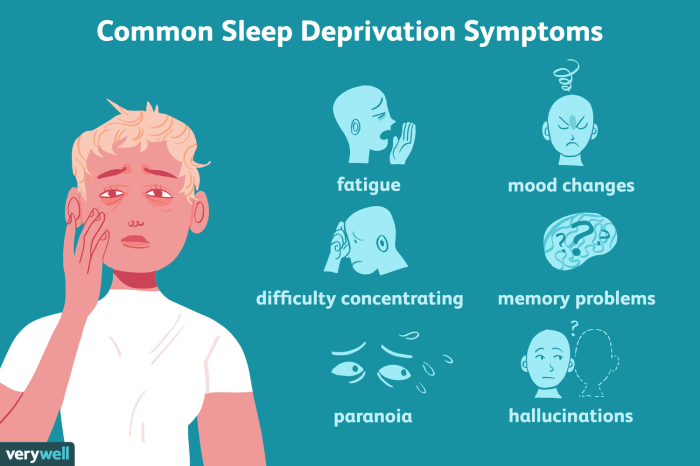
Sleep deprivation and mental health are inextricably linked. This exploration delves into the profound impact insufficient sleep has on our mental well-being, examining the physiological connections and the ways sleep disturbances exacerbate existing conditions like depression, anxiety, and even psychosis. We will uncover the complex interplay between these two crucial aspects of our overall health, offering insights into effective management strategies and resources for support.
Understanding the bidirectional relationship between sleep and mental health is crucial for effective self-care and treatment. This involves recognizing the symptoms of sleep deprivation, identifying potential underlying mental health issues, and adopting strategies to improve sleep hygiene and manage stress. From practical tips for improving sleep quality to exploring the benefits of mindfulness and therapy, this examination aims to equip readers with the knowledge and tools to prioritize both their physical and mental well-being.
The Impact of Sleep Deprivation on Mental Health
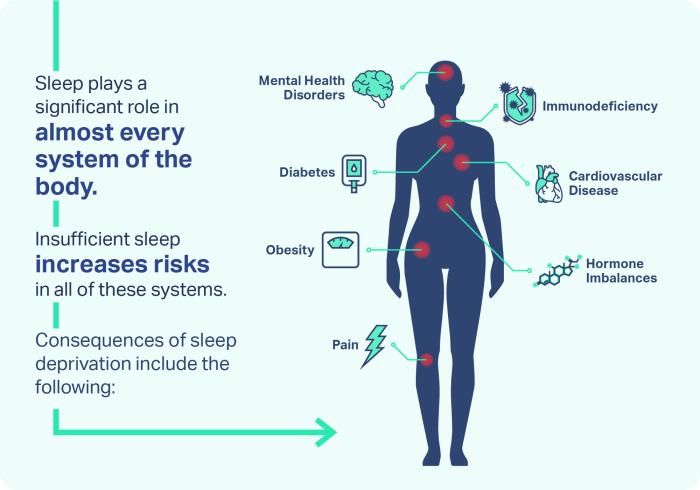
Sleep deprivation significantly impacts mental well-being, creating a ripple effect throughout the body and mind. The intricate relationship between sufficient sleep and mental health is not merely correlational; it’s deeply physiological. Lack of adequate rest disrupts crucial brain processes, leading to a cascade of negative consequences for mental health.
The Physiological Link Between Sleep and Mental Well-being
Sleep plays a vital role in consolidating memories, regulating mood, and managing stress. During sleep, the brain clears out toxins, including amyloid beta, a protein linked to Alzheimer’s disease. Furthermore, sleep is essential for the production and regulation of neurotransmitters like serotonin and norepinephrine, crucial for mood regulation and cognitive function. Deprivation of sleep disrupts this delicate balance, leading to impaired cognitive function, emotional dysregulation, and increased vulnerability to mental health issues.
For example, reduced REM sleep, crucial for emotional processing, can contribute to irritability, anxiety, and difficulty managing emotions.
Exacerbation of Existing Mental Health Conditions by Sleep Deprivation
Sleep deprivation acts as a significant stressor, capable of worsening pre-existing mental health conditions. Individuals with depression, anxiety, and bipolar disorder often experience disrupted sleep patterns. Sleep loss can intensify symptoms, making it harder to manage the condition. For instance, a person with depression already struggling with low mood and lack of motivation might find these symptoms dramatically amplified by sleep deprivation, leading to a further decline in their overall functioning.
Similarly, individuals with anxiety disorders may experience heightened anxiety and panic attacks due to sleep loss, as their coping mechanisms are weakened. In bipolar disorder, sleep disruption can trigger mood swings and exacerbate manic or depressive episodes.
Manifestations of Sleep Disturbances in Different Mental Illnesses
Sleep disturbances manifest differently across various mental illnesses. In depression, individuals often experience insomnia, characterized by difficulty falling asleep, staying asleep, or experiencing early morning awakenings. Anxiety disorders are frequently associated with insomnia and hypersomnia (excessive sleepiness), while nightmares and sleep terrors are more common in post-traumatic stress disorder (PTSD). Individuals with bipolar disorder may experience insomnia during manic episodes and hypersomnia during depressive episodes.
These sleep disturbances are not merely symptoms; they actively contribute to the severity and persistence of the underlying mental illness.
Comparison of Sleep Deprivation and Mental Health Disorder Symptoms
The following table compares the symptoms of sleep deprivation with those of several common mental health disorders:
| Symptom | Sleep Deprivation | Depression | Anxiety | PTSD |
|---|---|---|---|---|
| Mood | Irritability, mood swings, anxiety | Persistent sadness, loss of interest, hopelessness | Excessive worry, nervousness, fear | Flashbacks, nightmares, emotional numbness |
| Sleep | Difficulty falling/staying asleep, excessive daytime sleepiness | Insomnia, hypersomnia | Insomnia, hypersomnia | Insomnia, nightmares, sleep terrors |
| Cognitive Function | Impaired concentration, memory problems, difficulty making decisions | Difficulty concentrating, memory problems, slowed thinking | Difficulty concentrating, racing thoughts, hypervigilance | Intrusive thoughts, flashbacks, difficulty concentrating |
| Physical Symptoms | Fatigue, headaches, muscle aches | Fatigue, changes in appetite, weight loss/gain | Muscle tension, restlessness, gastrointestinal problems | Muscle tension, gastrointestinal problems, chronic pain |
Specific Mental Health Conditions Exacerbated by Sleep Loss
Sleep deprivation significantly impacts mental well-being, exacerbating pre-existing conditions and increasing the risk of developing new ones. The intricate relationship between sleep and mental health is complex, with insufficient sleep acting as both a trigger and a worsening factor for various mental health disorders. Understanding this connection is crucial for effective prevention and treatment strategies.
Sleep Deprivation and Depression
Insufficient sleep profoundly affects mood and cognitive function, significantly contributing to the development and worsening of depressive symptoms. Studies consistently demonstrate a strong bidirectional relationship between sleep disturbances and depression. Individuals with depression frequently experience insomnia, characterized by difficulty falling asleep, staying asleep, or experiencing non-restorative sleep. Conversely, sleep deprivation itself can trigger depressive symptoms, including low mood, loss of interest in activities, fatigue, and difficulty concentrating.
The impact on cognitive function manifests as impaired memory, reduced attention span, and difficulty with decision-making, further hindering an individual’s ability to cope with daily life and exacerbating feelings of hopelessness and helplessness. For example, a study published in the
American Journal of Psychiatry* found that individuals with major depressive disorder who received cognitive behavioral therapy for insomnia experienced significant improvements in both their sleep quality and depressive symptoms.
Insomnia and Anxiety Disorders
Insomnia, a common sleep disorder characterized by difficulty initiating or maintaining sleep, is strongly linked to anxiety disorders. The relationship is cyclical: anxiety can disrupt sleep, leading to insomnia, which in turn worsens anxiety symptoms. The chronic lack of sleep associated with insomnia can heighten physiological arousal, making individuals more susceptible to experiencing heightened anxiety, panic attacks, and increased worry.
Furthermore, sleep deprivation impairs cognitive function, making it more challenging to manage anxious thoughts and regulate emotional responses. This vicious cycle can significantly impact an individual’s quality of life and overall mental well-being. For instance, individuals with generalized anxiety disorder often report difficulty falling asleep and frequent awakenings during the night, further fueling their anxiety and making it difficult to function during the day.
Sleep Deprivation and Increased Risk of Psychosis
Research indicates a strong correlation between sleep deprivation and an increased risk of experiencing psychotic symptoms, particularly in individuals with a pre-existing vulnerability to psychosis. Sleep deprivation can disrupt the delicate balance of neurotransmitters in the brain, potentially triggering or exacerbating psychotic episodes characterized by hallucinations, delusions, and disorganized thinking. While sleep deprivation alone does not cause psychosis, it can act as a significant stressor that lowers the threshold for the onset of psychotic symptoms in susceptible individuals.
Studies have shown that sleep deprivation can amplify existing cognitive deficits and impair executive functions, contributing to the disorganization and impaired reality testing often seen in psychotic states. Longitudinal studies tracking individuals at high risk for psychosis have shown that those experiencing significant sleep disturbances are more likely to develop full-blown psychotic disorders.
Strategies for Improving Sleep Hygiene in Individuals with Depression and Anxiety
Improving sleep hygiene is crucial for managing both depression and anxiety. Consistent and effective strategies can significantly improve sleep quality and, consequently, mental health outcomes.
- Establish a regular sleep schedule: Go to bed and wake up at the same time every day, even on weekends, to regulate the body’s natural sleep-wake cycle.
- Create a relaxing bedtime routine: Engage in calming activities before bed, such as taking a warm bath, reading a book, or listening to relaxing music, to signal to the body that it’s time to sleep.
- Optimize the sleep environment: Ensure the bedroom is dark, quiet, and cool. A comfortable mattress and pillows can also contribute to better sleep.
- Limit screen time before bed: The blue light emitted from electronic devices can interfere with melatonin production, making it harder to fall asleep.
- Regular exercise: Physical activity can improve sleep quality, but avoid strenuous exercise close to bedtime.
- Cognitive Behavioral Therapy for Insomnia (CBT-I): CBT-I is a highly effective therapy for insomnia that addresses underlying cognitive and behavioral factors contributing to sleep problems.
- Mindfulness and relaxation techniques: Practices like meditation and deep breathing can help reduce anxiety and promote relaxation, improving sleep.
- Seek professional help: Consulting a healthcare professional or therapist is crucial for individuals struggling with persistent sleep problems and mental health concerns.
Stress and Anxiety Management Techniques
Effective stress and anxiety management is crucial for improving sleep quality and overall mental well-being, especially when sleep deprivation is a factor. These techniques can help regulate the body’s stress response and promote relaxation, leading to better sleep and reduced anxiety levels. Implementing even one or two of these methods can make a significant difference.
Progressive Muscle Relaxation
Progressive muscle relaxation is a technique that involves systematically tensing and releasing different muscle groups in the body. This process helps to increase awareness of physical tension and promotes deep relaxation. The step-by-step process allows for a gradual unwinding of physical and mental stress.
- Find a quiet, comfortable place where you can lie down or sit comfortably without interruption for 15-20 minutes.
- Begin by focusing on your breath, taking slow, deep breaths. Notice the sensation of the air entering and leaving your body.
- Starting with your toes, tense the muscles in one specific area of your body (e.g., your right foot). Hold the tension for 5-7 seconds.
- Release the tension completely and notice the feeling of relaxation that follows. Remain in this relaxed state for 10-15 seconds, focusing on the contrast between tension and relaxation.
- Move on to the next muscle group (e.g., your right calf), repeating steps 3 and 4. Continue this process, working your way up your body, systematically tensing and releasing muscle groups in your legs, thighs, abdomen, chest, arms, hands, shoulders, neck, and face.
- Once you have completed the entire sequence, take a few more deep breaths, allowing your body to sink further into relaxation. Remain in this state for a few minutes before slowly getting up.
Deep Breathing Exercises for Stress Reduction
Deep breathing exercises activate the parasympathetic nervous system, which helps to slow the heart rate and reduce the production of stress hormones. By consciously controlling your breathing, you can influence your body’s physiological response to stress. Different breathing techniques offer various benefits; finding one that suits you best is key.Deep, slow breaths increase oxygen intake, which can improve alertness and cognitive function while reducing feelings of anxiety.
The act of focusing on your breath also serves as a form of mindfulness, diverting attention away from anxious thoughts. For example, the 4-7-8 technique involves inhaling for 4 seconds, holding for 7 seconds, and exhaling for 8 seconds. This slow, controlled breathing pattern can promote relaxation and reduce feelings of overwhelm.
Mindfulness Meditation for Improved Sleep and Anxiety Reduction, Sleep deprivation and mental health
Mindfulness meditation involves focusing on the present moment without judgment. This practice can help to quiet the mind, reduce racing thoughts, and promote relaxation, which are all essential for improving sleep quality and managing anxiety. Regular practice strengthens the ability to manage stressful situations and improves sleep hygiene.By focusing on your breath, body sensations, or sounds, you train your mind to stay present, reducing rumination on past events or worries about the future.
This increased awareness of the present moment helps to reduce anxiety by interrupting the cycle of negative thoughts. Even short meditation sessions (5-10 minutes) can have a positive impact on sleep and anxiety levels. Guided meditations, readily available through apps or online resources, can be particularly helpful for beginners.
Stress Management Techniques Infographic
The infographic would be visually appealing and easy to understand, using a combination of icons, short text descriptions, and a calming color palette (e.g., blues, greens, and soft yellows).The infographic would be divided into sections, each representing a different stress management technique. Each section would include a concise description of the technique and a small icon representing it. The techniques included would be: Progressive Muscle Relaxation (icon: a person relaxing with muscles highlighted), Deep Breathing Exercises (icon: lungs with air flowing), Mindfulness Meditation (icon: a person meditating), Exercise (icon: a person running or exercising), Spending Time in Nature (icon: trees and a sun), Journaling (icon: a pen and notebook), and Getting Enough Sleep (icon: a sleeping person).
A title at the top would read “Stress Less: Effective Management Techniques.” A concluding statement at the bottom might read: “Prioritize your well-being. Choose the techniques that work best for you.” The overall design would aim for clarity and simplicity, making it easily digestible and shareable.
Depression Support Resources and Strategies
Depression is a significant mental health challenge affecting millions globally. Fortunately, numerous resources and strategies exist to support individuals in managing and overcoming depressive symptoms. Understanding these options and implementing effective coping mechanisms can significantly improve well-being and contribute to recovery.
Reputable Organizations Offering Depression Support
Accessing professional help is crucial in navigating depression. Several reputable organizations offer a range of services, including therapy, support groups, and educational resources. These organizations provide a valuable network of support and guidance for individuals and their families.
- The National Institute of Mental Health (NIMH): Offers comprehensive information on depression, treatment options, and research findings.
- The Depression and Bipolar Support Alliance (DBSA): Provides peer support groups, educational materials, and advocacy for individuals affected by mood disorders.
- The National Alliance on Mental Illness (NAMI): Offers support groups, educational programs, and advocacy services for individuals and families affected by mental illness, including depression.
- The Substance Abuse and Mental Health Services Administration (SAMHSA): Provides a national helpline (SAMHSA National Helpline: 1-800-662-HELP (4357)) and resources to locate mental health services in your community.
Evidence-Based Coping Mechanisms for Managing Depressive Symptoms
Implementing evidence-based coping strategies can significantly alleviate depressive symptoms and improve overall mental well-being. These techniques are designed to address various aspects of depression, from managing negative thoughts to improving sleep and increasing physical activity.
- Cognitive Behavioral Therapy (CBT): CBT helps identify and challenge negative thought patterns and behaviors contributing to depression. It involves learning techniques to reframe negative thoughts and develop healthier coping strategies.
- Mindfulness and Meditation: Practicing mindfulness involves focusing on the present moment without judgment. Meditation techniques can help reduce stress, improve self-awareness, and regulate emotions.
- Regular Exercise: Physical activity releases endorphins, which have mood-boosting effects. Even moderate exercise can significantly improve mood and energy levels.
- Improved Sleep Hygiene: Establishing a regular sleep schedule, creating a relaxing bedtime routine, and ensuring a comfortable sleep environment can improve sleep quality and reduce fatigue, which often exacerbates depression.
- Healthy Diet: A balanced diet provides the necessary nutrients for brain function and overall well-being. Consuming nutrient-rich foods can positively impact mood and energy levels.
The Role of Social Support in Recovery from Depression
Strong social connections play a vital role in recovery from depression. Social support provides a sense of belonging, reduces feelings of isolation, and offers practical and emotional assistance during challenging times.The presence of supportive relationships can significantly improve adherence to treatment plans, enhance coping abilities, and promote a sense of hope and optimism. Open communication with loved ones, participation in social activities, and seeking help from trusted individuals are crucial aspects of leveraging social support for recovery.
For instance, sharing feelings with a close friend or family member can provide validation and reduce feelings of burden. Participating in group therapy sessions provides a sense of community and shared experience.
Steps to Take When Experiencing a Depressive Episode
A flowchart outlining the steps to take when experiencing a depressive episode would visually represent the process. The flowchart would begin with recognizing symptoms, followed by seeking professional help (e.g., therapist, doctor), implementing coping strategies (as listed above), and monitoring progress. It would also incorporate steps for managing crises, such as contacting a crisis hotline or emergency services if necessary.
The flowchart would emphasize the iterative nature of managing depression, with regular evaluation and adjustment of strategies as needed.
Mindfulness Practices for Improved Mental Well-being
Mindfulness, the practice of paying attention to the present moment without judgment, offers a powerful pathway to improved mental well-being, particularly when grappling with sleep deprivation’s impact on mental health. By cultivating present moment awareness, individuals can better manage stress, regulate emotions, and foster a deeper understanding of their inner world. This enhanced self-awareness allows for more effective coping strategies and improved resilience in the face of challenges.
Benefits of Mindfulness for Stress Reduction and Emotional Regulation
Mindfulness techniques directly address the physiological responses associated with stress. By focusing attention on the breath or bodily sensations, individuals can interrupt the cycle of negative thought patterns and reduce the activity of the amygdala, the brain region associated with fear and anxiety. This, in turn, lowers cortisol levels (the stress hormone), promoting relaxation and a sense of calm.
Furthermore, mindfulness cultivates emotional regulation by increasing awareness of emotions as they arise, without judgment or immediate reaction. This allows for a more considered response, preventing impulsive behaviors driven by overwhelming feelings. Regular mindfulness practice strengthens the prefrontal cortex, the area of the brain responsible for executive functions like emotional regulation and impulse control.
Guided Meditation Exercise for Sleep
Find a comfortable position, either sitting or lying down. Close your eyes gently. Bring your attention to your breath, noticing the sensation of the air entering and leaving your nostrils, the rise and fall of your chest or abdomen. If your mind wanders—and it will—gently redirect your attention back to your breath. Visualize a peaceful scene, perhaps a calming beach or a quiet forest.
Notice the details of this scene: the colors, sounds, and textures. As you continue to focus on your breath and your visualization, allow yourself to relax deeper and deeper. Repeat a calming phrase to yourself, such as “I am at peace,” or “I am letting go.” Continue this practice for 10-15 minutes. When you’re ready, slowly bring your awareness back to your surroundings, taking a few moments before opening your eyes.
Mindfulness and Enhanced Self-Awareness and Emotional Intelligence
Mindfulness cultivates self-awareness by fostering a non-judgmental observation of one’s thoughts, feelings, and bodily sensations. This heightened awareness allows individuals to identify patterns of thinking and behaving that may be contributing to stress or negative emotions. This increased self-understanding is the cornerstone of emotional intelligence, the ability to understand and manage one’s own emotions and the emotions of others.
By practicing mindfulness, individuals develop a greater capacity for empathy, compassion, and effective communication, leading to improved relationships and overall well-being. Regular mindfulness practice allows for a more nuanced understanding of internal states, leading to more adaptive responses to challenging situations.
Comparison of Mindfulness Techniques
| Mindfulness Technique | Description | Application for Sleep | Other Benefits |
|---|---|---|---|
| Mindful Breathing | Focusing on the sensation of breath entering and leaving the body. | Calms the nervous system, prepares the body for sleep. | Reduces stress, improves focus, enhances self-awareness. |
| Body Scan Meditation | Bringing awareness to different parts of the body, noticing sensations without judgment. | Releases physical tension, promotes relaxation. | Increases body awareness, reduces chronic pain. |
| Walking Meditation | Paying attention to the physical sensations of walking, the movement of the body. | Combines physical activity with mindfulness, promoting relaxation before bed. | Improves physical and mental well-being, increases awareness of the present moment. |
| Loving-Kindness Meditation | Cultivating feelings of compassion and kindness towards oneself and others. | Reduces negative emotions, promotes a sense of peace and acceptance before sleep. | Enhances empathy, improves relationships, reduces stress and anxiety. |
Therapy and Counseling Options for Sleep Problems and Mental Health
Addressing sleep problems and mental health often requires professional help. Therapy and counseling offer various approaches to tackle these interconnected issues, providing personalized strategies for improved well-being. Different therapeutic techniques cater to individual needs and preferences, offering a range of options to find the best fit for effective treatment.
Comparison of Therapeutic Approaches for Insomnia and Anxiety
Insomnia and anxiety frequently coexist, often requiring integrated treatment strategies. Cognitive Behavioral Therapy for Insomnia (CBT-I) directly targets maladaptive sleep habits and cognitive distortions contributing to insomnia. In contrast, Cognitive Behavioral Therapy (CBT) for anxiety focuses on identifying and modifying negative thought patterns and behaviors that fuel anxiety. While both utilize cognitive restructuring and behavioral techniques, CBT-I specifically addresses sleep hygiene, sleep restriction, and stimulus control, while CBT for anxiety may incorporate relaxation techniques like progressive muscle relaxation or mindfulness meditation, which can indirectly improve sleep.
Sometimes, a combined approach is most effective, addressing both the sleep disturbance and the underlying anxiety simultaneously.
Benefits of Cognitive Behavioral Therapy (CBT) for Sleep Disorders
CBT is a highly effective treatment for various sleep disorders, including insomnia. Its benefits stem from its focus on identifying and changing the thoughts and behaviors that contribute to sleep problems. CBT-I, for instance, helps individuals understand the cognitive factors influencing their sleep, such as worry or catastrophic thinking about sleeplessness. Through behavioral techniques like sleep restriction and stimulus control, CBT-I reshapes sleep patterns and reduces the association of the bed with wakefulness.
The lasting benefit of CBT is its empowering nature; individuals learn self-management strategies that they can utilize long-term to maintain healthy sleep habits. This contrasts with purely pharmacological approaches, which often address symptoms without addressing the underlying causes. Numerous studies demonstrate CBT-I’s effectiveness, showing significant improvements in sleep quality and duration compared to control groups or other interventions.
Psychotherapy’s Role in Managing Depression and Other Mental Health Conditions
Psychotherapy, encompassing various approaches like psychodynamic therapy, interpersonal therapy, and dialectical behavior therapy (DBT), plays a crucial role in managing depression and other mental health conditions. These therapies provide a supportive environment for exploring underlying emotional issues, developing coping mechanisms, and improving interpersonal relationships. For depression, psychotherapy can help individuals identify and challenge negative thought patterns, develop healthier coping strategies for stress and difficult emotions, and improve their overall sense of self-efficacy.
Similarly, for anxiety disorders, psychotherapy helps individuals manage their fears and anxieties through exposure therapy, cognitive restructuring, and relaxation techniques. The choice of therapy depends on the specific condition and individual needs; for example, DBT is particularly effective for borderline personality disorder, while interpersonal therapy focuses on improving relationships and communication skills. The overall goal is to equip individuals with the skills and understanding necessary to manage their mental health effectively.
Questions to Ask a Potential Therapist
Finding a good therapist is crucial for successful treatment. A list of relevant questions to ask a potential therapist includes inquiries about their experience treating specific conditions, their therapeutic approach, their fees and insurance coverage, and their availability for appointments. It’s also important to inquire about their approach to confidentiality, their communication style, and how they would address potential challenges or setbacks in therapy.
Clarifying these aspects ensures a comfortable and effective therapeutic relationship, fostering trust and open communication necessary for positive outcomes. Knowing their approach to treatment and their experience working with similar situations allows for an informed decision, ultimately leading to a better therapeutic experience.
Building Resilience and Coping Mechanisms: Sleep Deprivation And Mental Health
Resilience, the ability to bounce back from adversity, is crucial for navigating the challenges life throws our way, particularly when dealing with sleep deprivation and its impact on mental health. Building resilience isn’t about avoiding hardship; it’s about developing the skills and mindset to effectively manage stress and navigate difficult situations. This involves understanding the factors that contribute to resilience and actively implementing strategies to enhance it.Factors contributing to individual resilience are multifaceted and interconnected.
Genetic predispositions play a role, influencing our temperament and coping styles. However, environmental factors, such as supportive relationships, access to resources, and positive life experiences, significantly shape our ability to withstand adversity. Furthermore, personal characteristics like optimism, self-efficacy (belief in one’s ability to succeed), and a strong sense of purpose are key components of resilience. A person’s ability to adapt to change, learn from setbacks, and maintain a positive outlook also plays a significant role.
Strategies for Building Emotional Resilience
Developing emotional resilience involves proactive steps to strengthen one’s emotional and mental fortitude. This includes cultivating a growth mindset, viewing challenges as opportunities for learning and growth rather than insurmountable obstacles. Practicing mindfulness helps individuals to become more aware of their thoughts and emotions, enabling them to respond to stressful situations with greater clarity and composure. Regular physical activity, a balanced diet, and sufficient sleep (ironically, a key element often lacking in those struggling with mental health due to sleep deprivation) are fundamental to maintaining both physical and mental well-being, strengthening resilience against stress.
Furthermore, engaging in activities that bring joy and a sense of purpose, whether it’s spending time in nature, pursuing hobbies, or connecting with loved ones, can significantly boost emotional resilience.
The Role of Self-Compassion in Managing Stress
Self-compassion, treating oneself with kindness and understanding during times of struggle, is a powerful tool for managing stress and mental health challenges. It involves acknowledging suffering without judgment, recognizing that imperfection is inherent to the human experience, and offering oneself the same kindness and support one would offer a friend in a similar situation. Self-criticism, a common response to setbacks, often exacerbates stress and hinders resilience.
In contrast, self-compassion allows for a more balanced and supportive internal dialogue, fostering a sense of self-acceptance and promoting emotional healing. Studies have shown that self-compassion is strongly correlated with lower levels of stress, anxiety, and depression.
Practical Tips for Improving Resilience
Building resilience is an ongoing process, not a destination. Consistent effort is key to strengthening one’s ability to cope with adversity.
- Practice mindfulness and meditation: Regular mindfulness exercises can help you manage stress and improve your emotional regulation.
- Cultivate strong social connections: Strong social support networks provide a buffer against stress and promote emotional well-being.
- Engage in regular physical activity: Exercise releases endorphins, which have mood-boosting effects.
- Prioritize healthy sleep habits: Aim for 7-9 hours of quality sleep per night.
- Maintain a balanced diet: Nourishing your body with healthy foods provides the fuel it needs to cope with stress.
- Learn stress-management techniques: Techniques such as deep breathing, progressive muscle relaxation, and yoga can help you manage stress effectively.
- Set realistic goals and expectations: Avoid overcommitting yourself and prioritize tasks to prevent burnout.
- Practice self-compassion: Treat yourself with kindness and understanding, especially during difficult times.
- Seek professional help when needed: Don’t hesitate to reach out to a therapist or counselor if you’re struggling to cope.
The Interplay Between Sleep and Mental Health
Sleep and mental health are intricately linked in a continuous feedback loop, influencing each other profoundly. Understanding this bidirectional relationship is crucial for effective prevention and treatment strategies for both sleep disorders and mental illnesses. Poor sleep can significantly worsen existing mental health conditions, while untreated mental health issues often disrupt sleep patterns, creating a vicious cycle.The relationship between sleep and mental health is not simply correlational; it’s deeply rooted in shared neurobiological mechanisms.
Many neurotransmitters and brain regions involved in sleep regulation also play critical roles in mood, cognition, and emotional processing. For example, serotonin, a neurotransmitter vital for sleep, also influences mood and emotional stability. Similarly, the prefrontal cortex, crucial for executive function and decision-making, is also implicated in sleep regulation. Disruptions in these systems can manifest as both sleep problems and mental health challenges.
Neurobiological Mechanisms Underlying the Sleep-Mental Health Connection
The complex interplay between sleep and mental health involves several key neurobiological pathways. Imbalances in neurotransmitters like serotonin, dopamine, norepinephrine, and GABA, all crucial for sleep regulation, can directly impact mood, anxiety, and cognitive function. Furthermore, the hypothalamic-pituitary-adrenal (HPA) axis, responsible for the body’s stress response, is closely linked to sleep cycles. Chronic stress, often leading to sleep disturbances, can overactivate the HPA axis, contributing to anxiety and depression.
Conversely, sleep deprivation can further disrupt the HPA axis, exacerbating stress and its associated mental health consequences. Specific brain regions like the amygdala (processing fear and emotions) and the hippocampus (memory consolidation) are also affected by sleep deprivation, potentially contributing to anxiety disorders and cognitive impairment.
Examples of the Bidirectional Relationship
Sleep problems can significantly contribute to the development and worsening of mental illnesses. For instance, chronic insomnia is frequently associated with increased risk and severity of depression and anxiety. Individuals with insomnia often experience heightened emotional reactivity, difficulty concentrating, and impaired cognitive function, mirroring symptoms of depression and anxiety. Conversely, individuals suffering from depression and anxiety often experience significant sleep disturbances, including insomnia, hypersomnia (excessive sleepiness), and disrupted sleep architecture (e.g., reduced slow-wave sleep).
The lack of restorative sleep further exacerbates the symptoms of these conditions, creating a negative feedback loop. For example, a person with pre-existing anxiety might experience increased worry and difficulty falling asleep due to racing thoughts, leading to further sleep deprivation, which in turn worsens their anxiety.
Visual Representation of the Sleep-Mental Health Interplay
The visual representation would be a circular diagram. At the center is a circle labeled “Sleep Quality.” Arrows radiate outwards to four larger circles representing key mental health conditions: Depression, Anxiety, PTSD, and Bipolar Disorder. Each arrow is bidirectional, indicating that poor sleep quality can worsen these conditions, and these conditions can in turn disrupt sleep quality.
Within each of the four larger circles are smaller circles representing specific symptoms (e.g., for Depression: low mood, fatigue, loss of interest; for Anxiety: worry, nervousness, panic attacks). These smaller circles are also connected to the central “Sleep Quality” circle with bidirectional arrows. Finally, connecting all the circles are smaller arrows representing shared neurobiological factors like serotonin, dopamine, cortisol levels, and the HPA axis activity, highlighting the underlying mechanisms connecting sleep and mental health.
This circular design emphasizes the cyclical and interconnected nature of the relationship, where one factor influences the other in a continuous feedback loop.
In conclusion, the connection between sleep deprivation and mental health is undeniable and multifaceted. Addressing sleep disturbances is not merely about improving rest; it’s a vital step towards enhancing mental well-being and overall health. By understanding the physiological links, recognizing the impact on various mental health conditions, and implementing effective management strategies, individuals can take proactive steps towards a healthier and more balanced life.
Seeking professional help when needed is crucial, and remember that prioritizing self-care and building resilience are key components in this journey towards improved mental and physical health.
FAQ Compilation
How much sleep do I really need?
Most adults need 7-9 hours of quality sleep per night, though individual needs may vary.
What are some quick ways to improve my sleep?
Establish a regular sleep schedule, create a relaxing bedtime routine, and ensure your bedroom is dark, quiet, and cool. Avoid caffeine and alcohol before bed.
When should I seek professional help for sleep problems?
If sleep problems significantly impact your daily life, mood, or overall health, or if you suspect an underlying medical or mental health condition, consult a doctor or mental health professional.
Can sleep deprivation cause permanent damage?
While most effects of sleep deprivation are reversible with sufficient rest, chronic sleep deprivation can increase the risk of serious health problems, including mental health disorders.