How to Reduce Stress at Work
How to reduce stress at work is a crucial question for many professionals. This guide explores practical strategies for managing workplace stressors, improving time management, and fostering a healthier work-life balance. We’ll delve into techniques for stress reduction, building resilience, and addressing mental health concerns, ultimately aiming to empower you to navigate the demands of your job with greater ease and well-being.
From identifying specific workplace stressors like heavy workloads and poor communication to implementing proven methods such as mindfulness and time-blocking, this comprehensive resource offers a roadmap to a less stressful and more fulfilling work experience. We’ll also examine the importance of seeking professional help when needed and creating a supportive work environment that prioritizes mental health.
Improving Work-Life Balance
Maintaining a healthy work-life balance is crucial for reducing stress and improving overall well-being. A blurred line between professional and personal life often leads to burnout, decreased productivity, and negatively impacts mental and physical health. Establishing clear boundaries and implementing effective strategies to disconnect from work are essential steps towards achieving a more balanced and fulfilling life.
Establishing Boundaries Between Work and Personal Life
Setting boundaries involves creating a clear separation between your work responsibilities and your personal time. This might involve defining specific work hours, designating a dedicated workspace at home (if working remotely), and communicating your availability clearly to colleagues and clients. For example, avoid checking emails or responding to work-related calls outside of designated work hours. This consistent approach helps to mentally switch off from work, preventing it from encroaching on personal time and reducing feelings of constant pressure.
This conscious effort promotes a healthier mental state and allows for more meaningful engagement in personal activities.
Strategies for Disconnecting from Work After Hours and During Weekends
Disconnecting effectively requires conscious effort and planning. This could involve creating a specific “wind-down” routine at the end of the workday, such as listening to calming music, engaging in a relaxing hobby, or spending time with loved ones. Turning off work notifications on your phone and computer is also crucial. Consider designating specific times for checking work emails outside of regular hours, rather than constantly monitoring your inbox.
Weekends should be treated as genuinely personal time, allowing for complete detachment from work pressures. Planning activities that promote relaxation and enjoyment will reinforce the boundary between work and personal life. A successful strategy might involve leaving work materials at the office and refraining from discussing work-related matters during weekend social gatherings.
Utilizing Vacation Time Effectively to Reduce Stress
Vacation time is not merely time off; it’s an opportunity to actively recharge and reduce accumulated stress. To maximize its effectiveness, plan your vacation in advance, ensuring it includes activities that genuinely relax and rejuvenate you. Avoid scheduling too many activities or trying to cram in sightseeing; allow time for spontaneous moments and relaxation. Consider disconnecting completely from work by turning off notifications and limiting access to work emails.
A true break from work allows your mind and body to rest, promoting better mental clarity and reducing stress upon returning to work. A week-long vacation focused on rest and relaxation will likely provide a more significant stress reduction than several shorter breaks.
Impact of Work-Life Balance on Overall Mental and Physical Health
A healthy work-life balance has a profound impact on both mental and physical well-being. Studies consistently show a strong correlation between work-life imbalance and increased risk of burnout, anxiety, depression, and cardiovascular problems. By prioritizing a balanced lifestyle, individuals can experience reduced stress levels, improved sleep quality, enhanced mood, and increased energy levels. Conversely, neglecting work-life balance can lead to decreased productivity, impaired cognitive function, and a weakened immune system.
Prioritizing self-care, including regular exercise, healthy eating, and sufficient sleep, is further enhanced by a healthy work-life balance, creating a synergistic effect on overall health and well-being.
Building Resilience
Building resilience is crucial for navigating the inevitable pressures of the workplace. It’s not about avoiding stress entirely, but rather developing the capacity to bounce back from setbacks, adapt to change, and maintain well-being even under challenging circumstances. This involves cultivating a positive mindset, developing effective coping mechanisms, and building a strong support network.Developing a positive mindset and self-compassion are foundational elements of resilience.
A positive outlook allows you to focus on solutions rather than dwelling on problems, while self-compassion helps you treat yourself with kindness and understanding, particularly during difficult times. This reduces self-criticism and fosters a sense of self-acceptance, which is vital for navigating workplace stress.
Strategies for Building Resilience
Resilience isn’t an innate trait; it’s a skill that can be learned and strengthened over time. Several strategies can significantly enhance your ability to withstand workplace pressures. These strategies focus on proactive self-care, cognitive reframing, and building supportive relationships.
Developing a Positive Mindset and Self-Compassion
A positive mindset involves consciously focusing on your strengths, accomplishments, and the positive aspects of your work. Regularly practicing gratitude, focusing on solutions instead of problems, and reframing negative thoughts into more positive ones are key elements. Self-compassion means treating yourself with the same kindness and understanding you would offer a friend facing similar challenges. This involves acknowledging your feelings without judgment, practicing self-forgiveness, and accepting your imperfections.
For example, instead of berating yourself for a mistake, acknowledge the error, learn from it, and move forward.
Managing Negative Emotions and Thoughts Effectively
Effective management of negative emotions and thoughts is crucial for building resilience. Techniques such as mindfulness meditation, deep breathing exercises, and cognitive restructuring can help. Mindfulness involves paying attention to the present moment without judgment, reducing the power of negative thought patterns. Deep breathing helps regulate your physiological response to stress. Cognitive restructuring involves identifying and challenging negative thought patterns, replacing them with more realistic and positive ones.
For instance, instead of thinking “I’ll never succeed,” you might reframe it as “This is challenging, but I can learn from this and improve.”
The Role of Social Support in Building Resilience
Strong social support networks are vital for building resilience. Connecting with supportive colleagues, friends, and family members provides a buffer against workplace stress. Sharing your experiences, seeking advice, and receiving emotional support can significantly reduce the impact of negative events. Actively cultivating and maintaining these relationships is a proactive step towards building resilience. This could involve joining a work-related social group, regularly connecting with friends and family, or seeking professional guidance from a therapist or counselor.
Stress and Anxiety Management
Workplace stress and anxiety are pervasive issues impacting employee well-being and productivity. Understanding the symptoms and implementing effective coping mechanisms are crucial for maintaining a healthy work environment. This section will explore common symptoms, practical coping strategies, and readily available resources to help manage stress and anxiety effectively.
Symptoms of Workplace Stress and Anxiety
Stress and anxiety manifest in various ways, both physically and emotionally. Physical symptoms can include headaches, muscle tension, fatigue, digestive problems, sleep disturbances, and a weakened immune system. Emotionally, individuals might experience irritability, difficulty concentrating, feelings of overwhelm, nervousness, restlessness, and persistent worry. Behavioral changes may also occur, such as increased procrastination, social withdrawal, changes in appetite, and substance abuse.
Recognizing these symptoms is the first step towards addressing the underlying issues.
Coping Mechanisms for Stress and Anxiety
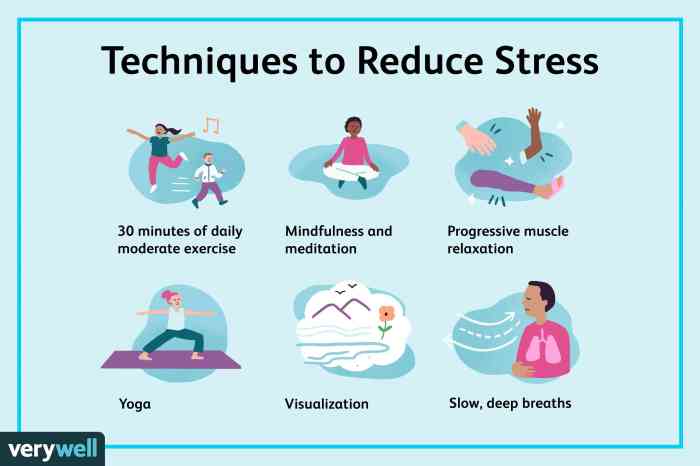
Effective stress and anxiety management involves a multi-faceted approach. This includes prioritizing self-care, practicing mindfulness and relaxation techniques, and developing healthy coping strategies. Regular exercise, a balanced diet, and sufficient sleep are fundamental to overall well-being and resilience. Mindfulness practices, such as meditation and deep breathing exercises, can help calm the nervous system and reduce feelings of anxiety.
Cognitive behavioral therapy (CBT) techniques can help identify and challenge negative thought patterns that contribute to stress and anxiety. Time management strategies, such as prioritizing tasks and setting realistic goals, can also reduce feelings of overwhelm. Finally, building a strong support network of friends, family, and colleagues can provide emotional support and a sense of community.
Resources for Stress and Anxiety Management, How to reduce stress at work
Numerous resources are available to support individuals in managing stress and anxiety. These include mental health professionals, such as therapists and counselors, who can provide personalized support and guidance. Employee assistance programs (EAPs) offered by many employers provide confidential counseling and other resources. Online resources, such as reputable websites and apps, offer self-help tools, guided meditations, and information on stress management techniques.
Support groups and workshops can provide a sense of community and shared experience. Remember to seek professional help if symptoms are severe or persistent.
Anxiety Management Techniques
| Technique | Benefits | Drawbacks | Accessibility |
|---|---|---|---|
| Deep Breathing Exercises | Reduces heart rate and blood pressure, promotes relaxation, easily accessible | May not be effective for severe anxiety, requires practice | High; can be done anywhere |
| Progressive Muscle Relaxation | Reduces muscle tension, promotes relaxation, improves sleep | Requires time and commitment, may not be suitable for all | Medium; requires dedicated time and space |
| Mindfulness Meditation | Increases self-awareness, reduces rumination, improves emotional regulation | Requires regular practice, can be challenging initially | Medium; requires dedicated time and a quiet space, apps and guided meditations available |
| Cognitive Behavioral Therapy (CBT) | Identifies and challenges negative thought patterns, develops coping skills, long-term benefits | Requires professional guidance, may require multiple sessions | Low; requires access to a therapist or counselor |
Depression Support Resources
Depression can significantly impact workplace performance and overall well-being. Recognizing the signs, accessing support, and understanding the role of employers are crucial steps in fostering a healthier and more supportive work environment. This section provides information on recognizing depression in the workplace, available resources, and the importance of seeking professional help.
Common Signs and Symptoms of Depression in the Workplace
Recognizing the signs of depression is the first step towards seeking help. While not everyone experiences all symptoms, persistent changes in behavior or mood warrant attention. These symptoms can manifest in various ways, impacting productivity and interpersonal relationships.
- Persistent sadness, low mood, or feelings of hopelessness.
- Loss of interest or pleasure in activities previously enjoyed, including work tasks.
- Significant changes in appetite or sleep patterns, such as insomnia or excessive sleeping.
- Fatigue or loss of energy, leading to decreased productivity and difficulty concentrating.
- Feelings of worthlessness, guilt, or excessive self-criticism.
- Difficulty concentrating, remembering things, or making decisions.
- Restlessness or irritability.
- Recurrent thoughts of death or suicide.
Resources and Support Networks for Individuals Experiencing Depression
Numerous resources and support networks exist to help individuals struggling with depression. Accessing these resources can provide crucial support and guidance on the path to recovery.
- Employee Assistance Programs (EAPs): Many employers offer EAPs, providing confidential counseling and support services to employees.
- Mental health professionals: Therapists, psychiatrists, and counselors offer various therapies, including cognitive behavioral therapy (CBT) and medication management.
- Support groups: Connecting with others facing similar challenges can provide valuable emotional support and a sense of community.
- Online resources: Websites and apps offer information, support, and self-help tools for managing depression.
- National helplines: Many countries have national helplines dedicated to mental health, offering immediate support and crisis intervention.
The Importance of Seeking Professional Help for Depression
Depression is a treatable condition, and seeking professional help is crucial for recovery. Untreated depression can lead to further complications, affecting both personal and professional life. Professional help provides a safe and supportive environment to address the underlying causes and develop coping mechanisms. Early intervention significantly improves the chances of successful recovery.
The Role of Employers in Supporting Employees Struggling with Depression
Employers play a vital role in creating a supportive and understanding workplace for employees facing depression. This includes providing access to resources, promoting mental health awareness, and fostering a culture of open communication and empathy.
- Offering access to EAPs and mental health benefits: This demonstrates a commitment to employee well-being and facilitates access to professional help.
- Promoting mental health awareness through training and education: Educating employees and managers about depression can reduce stigma and encourage help-seeking behavior.
- Creating a supportive and inclusive work environment: This involves fostering open communication, reducing workplace stress, and promoting a culture of empathy and understanding.
- Offering flexible work arrangements: Adjusting work schedules or responsibilities can help employees manage their condition and maintain productivity.
- Providing reasonable accommodations: Employers may need to make reasonable adjustments to the workplace or work tasks to support employees with depression.
Mindfulness Practices: How To Reduce Stress At Work
Mindfulness, at its core, is the practice of paying attention to the present moment without judgment. It involves cultivating awareness of your thoughts, feelings, bodily sensations, and the environment around you, accepting them without getting carried away by them. This simple yet powerful technique can be a surprisingly effective tool for reducing workplace stress. By anchoring yourself in the present, you lessen the grip of anxieties about the future or regrets about the past, both significant contributors to workplace stress.Mindfulness cultivates a sense of calm and clarity, allowing for more effective problem-solving and decision-making.
It helps to create a space between your reactions and your responses to stressful situations, enabling you to choose your actions rather than being controlled by your emotions.
Principles of Mindfulness and Stress Reduction
Mindfulness involves several key principles that contribute to stress reduction. These include focusing on the present moment, observing thoughts and feelings without judgment, accepting experiences as they are, and cultivating a non-reactive approach. By practicing these principles, individuals can interrupt the cycle of stress responses and foster a greater sense of inner peace and control. For example, instead of reacting impulsively to a demanding email, a mindful individual might pause, observe their feelings of frustration, and then respond thoughtfully and professionally.
This conscious shift in response helps to reduce the overall stress response.
Guided Mindfulness Meditation Exercise
Find a quiet space where you can sit or lie down comfortably. Close your eyes gently. Begin by focusing on your breath, noticing the sensation of the air entering and leaving your nostrils. Pay attention to the rise and fall of your abdomen. If your mind wanders—and it will—simply acknowledge the thought without judgment and gently redirect your attention back to your breath.
Continue this for five to ten minutes, focusing on your breath and body sensations. You may notice other sensations, such as sounds or feelings in your body. Simply observe these sensations without judgment. When the time is up, slowly bring your awareness back to your surroundings and gently open your eyes.
Incorporating Mindfulness into Daily Routines
Incorporating mindfulness into your daily routine doesn’t require extensive time commitments. Simple practices like mindful breathing during breaks, paying attention to your senses while eating lunch, or practicing mindful walking can significantly reduce stress levels throughout the day. Even a few minutes of focused attention on your breath can help to center you and improve your focus. Setting aside specific times for meditation, even just five minutes a day, can establish a regular mindfulness practice.
Utilizing mindfulness apps or guided meditations can also aid in establishing a consistent practice.
Long-Term Benefits of Regular Mindfulness Practice
Regular mindfulness practice offers a multitude of long-term benefits, extending beyond stress reduction. Studies have shown that consistent mindfulness practice can improve focus and concentration, enhance emotional regulation, increase self-awareness, and promote overall well-being. These benefits translate to improved work performance, stronger relationships, and a greater sense of resilience in the face of challenges. For instance, individuals who regularly practice mindfulness often report improved sleep quality, reduced anxiety, and increased feelings of contentment and satisfaction with their lives.
This improved well-being contributes to a more balanced and fulfilling life, both professionally and personally.
Ultimately, reducing stress at work is a journey, not a destination. By consistently implementing the strategies Artikeld in this guide—from effective time management and stress reduction techniques to cultivating a strong support network and prioritizing self-care—you can significantly improve your well-being and job satisfaction. Remember that seeking professional help is a sign of strength, not weakness, and that a supportive work environment is crucial for long-term success.
Prioritize your mental health; it’s an investment in your overall well-being and productivity.
Common Queries
What if my employer isn’t supportive of mental health initiatives?
Consider discussing your concerns with HR or a supervisor. If that doesn’t resolve the issue, explore external resources and support networks.
How can I manage stress during particularly busy periods?
Prioritize tasks, utilize time management techniques, and practice regular stress-reduction methods like deep breathing or short mindfulness exercises throughout the day.
Are there any quick stress-relief techniques I can use at my desk?
Try deep breathing exercises, progressive muscle relaxation, or a quick mindfulness meditation. Even a short walk can help.
What are the early warning signs of burnout?
Look for persistent exhaustion, cynicism, reduced professional efficacy, and feelings of detachment from work.